Thursday, November 16, 2023

Open Post

It's been while since the last open post so let's do it again.  This is your chance to offer a comment on whatever interests you.


Got a suggestion for a post topic?

Want to talk about something that's been neglected?

Want to tell me what you'd like more (or less) of?

Want to tell me how you'd make the blog better?

Want to give a shout out to your favorite foreign ship design?

Got a rant you want to get off your chest?

Have at it!

Monday, November 13, 2023

Radar – Rotating vs. Panels

We previously compared vertical launch systems (VLS) to arm launchers (see, “VLS Versus Arm Launchers”) and concluded that VLS was not quite the unquestioned advantage that it was claimed and assumed to be.  Similarly, we’re now going to compare rotating radars against fixed, flat panel arrays which are assumed to be infinitely superior.
 
One of the major developments in naval sensors has been the advent of flat panel radar arrays.  The panels are mounted on the sides of the superstructure with, typically, 3-4 spaced around so as to provide 360 degree coverage, each panel covering 90-120 degrees.  This architecture is assumed to be hugely more beneficial than conventional, rotating radars, presumably due to the elimination of moving parts as well as the simultaneous improvement in radar technology, generally.  Is this assumption of superiority valid?  Let’s see.
 
Let’s start by understanding the three basic types of radar configurations:
 
Conventional Lattice – These are typified by the SPS-48/49 which are modern versions of the classic, mechanically steered, rotating radars with a lattice framework.
 
Wasp class with SPS-48 on the right and SPS-49 on the left


Hybrid Panel – These place flat panels on a rotating assembly to produce a hybrid rotating panel.  Examples include the TRS-3D which rotates at 10, 17, 20 or 60 revolutions per minute (rpm) [1] or the TRS-4D which rotates at 15, 30 rpm [2].  Both are quite capable.
 
TRS-4D is a G-Band three-dimensional, multi-function naval radar for surveillance, target acquisition, self-defense, gunfire support, and aircraft control. It is a software-defined radar using a rotating version of the active electronically scanned array (AESA) with multiple digitally formed beams. …
 
The TRS-4D radar simultaneously conducts a three dimensional search of the air space volume and sea surface area around the ship. … The transmitter modules in the active antenna are solid-state modules in Gallium Nitride technology. The radar allows a graceful degradation of the transmitted power depending on the required maximum range.
 
The MRESR version of the TRS-4D was installed on US LCS ships of the U.S. Navy’s Freedom class. It was designated by US Navy as AN/SPS-80.[2]


TRS-3D

 
Another example of a hybrid panel radar is the SPY-6(V)2 which is intended to be installed on amphibious ships and Nimitz class carriers.
 
SPY-6(v)2


Panel – These are the ubiquitous flat panels found on US ships and include the various Aegis SPY-1 variants, SPY-6 (Air and Missile Defense Radar, AMDR), SPY-6(V)3 Enterprise Air Surveillance Radar (EASR), and whatever other names they’re known by.
 
Flat Panel


Advantages and Disadvantages
 
Simplicity.  Flat panels are mechanically simpler in that they have fewer moving parts although, to be fair, a motor and some bearings to rotate on are not exactly rocket science in terms of complexity.  Still, no movement is undeniably simpler than rotating.
 
Of course, rotation is not the end of the simplicity story. 
 
Both types require sophisticated, complex computers/software to control and process the signals so that’s a wash.
 
What isn’t a wash is the extent of electronic and utility support that a panel requires.  Each element in a panel requires its own power, computer connections, data and computer control connections, and cooling support.  A rotating radar requires much the same but only a single instance of each, as opposed to an instance for each element of the array.  Notably, rotating radars do not require cooling which is a major requirement.
 
Further, the individual modules that make up a panel are quite complicated and there is no hope of repairing one aboard ship.  On the plus side, they can be swapped out without too much difficulty, as I understand it.  Similarly, the ‘guts’ of a hybrid panel are similarly complex.  The conventional lattice is, of course, as simple as it gets.
 
Volume.  Rotating radars are essentially external to the ship whereas panels require significant amounts of internal ship’s volume to house the array elements and support equipment.  Further, panels typically exist as 3-4 repeated installations, each of which requires its own, equal, large amount of ship’s volume to house it.  Thus, rotating units require only, perhaps, a tenth of panel’s volume.  This is a significant consideration in ship cost and design.
 
Weight.  I do not have data on unit weights but I assume that panels, with 3-4 duplicates and large elements, have significantly higher total weight than rotating units.
 
Damage Resiliency.  Older, lattice type rotating radars have a degree of inherent damage resiliency in that their lattice structure is mostly space.  Shrapnel sprayed in their direction will largely pass through with little resulting damage.  The denser the lattice or, in the case of rotating panels, the greater the degree of damage susceptibility.  Rotating panels, while solid as opposed to a lattice, are smaller than a rotating lattice and significantly smaller than flat panels.  Thus, their size confers a degree of damage resilience.
 
Fixed panels, on the other hand, are absolutely certain to sustain damage from shrapnel.  One hundred percent of shrapnel from nearby explosions will impact the panel with every piece producing damage.  Manufacturer’s claim that panels are resistant to damage because the undamaged elements can continue to function, albeit at a lower overall efficiency and effectiveness.  However, this claim is unproven by any realistic testing.  For example, while a single damaged element may not significantly impact the overall radar performance, what is ignored is the cabling, communications, cooling, and power ‘behind’ the elements and those are extremely vulnerable to damage and would, when damaged, likely affect large portions, or all, of the panel.  The manufacturer’s claims do not consider this type of damage, at all.
 
When damage does occur, if you lose a panel, you lose that coverage sector (90-120 degrees) permanently.  There is no alternative mechanism to compensate.  You have a permanent hole in your coverage.  Not good in combat!  In contrast, a rotating radar provides full coverage until it is completely incapacitated.  In addition, the typical radar arrangement of -48 and -49 allows either radar to take over the other’s coverage in the event of damage.
 
Coverage.  Rotating radars, by their nature, provide only intermittent coverage as the active (transmitting and receiving) portion of the radar is always moving.  In many cases, such as tracking at long ranges, this is an insignificant issue since the target is not changing location fast enough to matter.  At closer ranges and higher target speeds, such as supersonic missiles inside the horizon, this can be a significant problem.
 
The problem of intermittent coverage can be mitigated by using higher rotational speed or using double sided radars which have active portions front and back thus providing near 360 degree coverage.
 
Alignment.  While I can’t speak to every panel radar that exists, the Aegis SPY variants apparently require a very precise alignment as evidenced by the impaired performance and required repairs of radars of ships that have grounded or been in a collision.  Whether this alignment sensitivity is true of modern panels, I have no idea.
 
Protection.  Flat panels are likely easier to protect with armor.  A simple armored cover can slide over the panel, as needed.  Rotating radars would require either a rotating, box-like arrangement or a retractable mechanism – doable, of course, but a bit more complicated.
 
Performance.  How effective is each radar type?  Panels and hybrids both use the same general technology so, ignoring size, there is no difference.  Of course, size does affect performance under certain circumstances (long range detection of small or stealthy targets, for example) and, in those cases, large panels would be preferred.
 
Detection range (against some theoretical target), alone, is not the measure of performance.  Performance is dependent on the circumstances of use.  If one is attempting to detect very long range, small targets, one would want the largest, most powerful panel possible.  Alternatively, if one is attempting to conduct a horizon range anti-air engagement, large panels are a waste and a small, rotating or hybrid radar would be preferred.
 
However, performance cannot be divorced from other aspects such as survivability, maintainability, repairability, size, weight, etc.  Performance must be appropriately weighted in balance with the other factors.
 
Bear in mind that manufacturers focus on extreme detection range against ideal targets as the measure of performance.  In reality, that is an unlikely use case in combat (EMCON being the default state!) where horizon range engagements are the far more likely scenario.  Being able to detect a stealth mosquito a continent away is of no use when engaging missiles from the horizon in.
 
The interesting aspect of performance is the question, to what degree can a conventional lattice radar be improved?  There seems to be no end to the degree of improvement that panels can undergo but what about lattice radars?  Can they be improved?  How much?
 
A closely related question is, to what degree do lattice radars need to be improved.  Given that we’ve stated that horizon range engagements are the most likely use case, and knowing that lattice radars have theoretical detection ranges of hundreds of miles (against suitable, theoretical targets), how much better do they need to be?  Perhaps they’re more than sufficient, right now?  If a lattice radar can provide, say, 90% of the required performance at a miniscule fraction of the cost, is that not good enough?  I can’t answer that.  I merely pose the questions but they are important questions.
 
 
Conclusion
 
It is clear that each type of radar configuration has advantages and disadvantages and that modern flat panels are not the unquestioned superior choice that most assume.  The choice of radar configuration depends on the balance between all the factors.  It would seem that hybrid rotating panels represent the best balance, overall.  They have good performance, less weight, consume little internal volume, provide adequate coverage, and have a reasonable cost.  Of course, much depends on the use case.  For example, a dedicated AAW ship might well justify multiple, large panels.
 
For general purpose surface ships, a hybrid rotating panel is the best choice.


__________________________

Friday, November 10, 2023

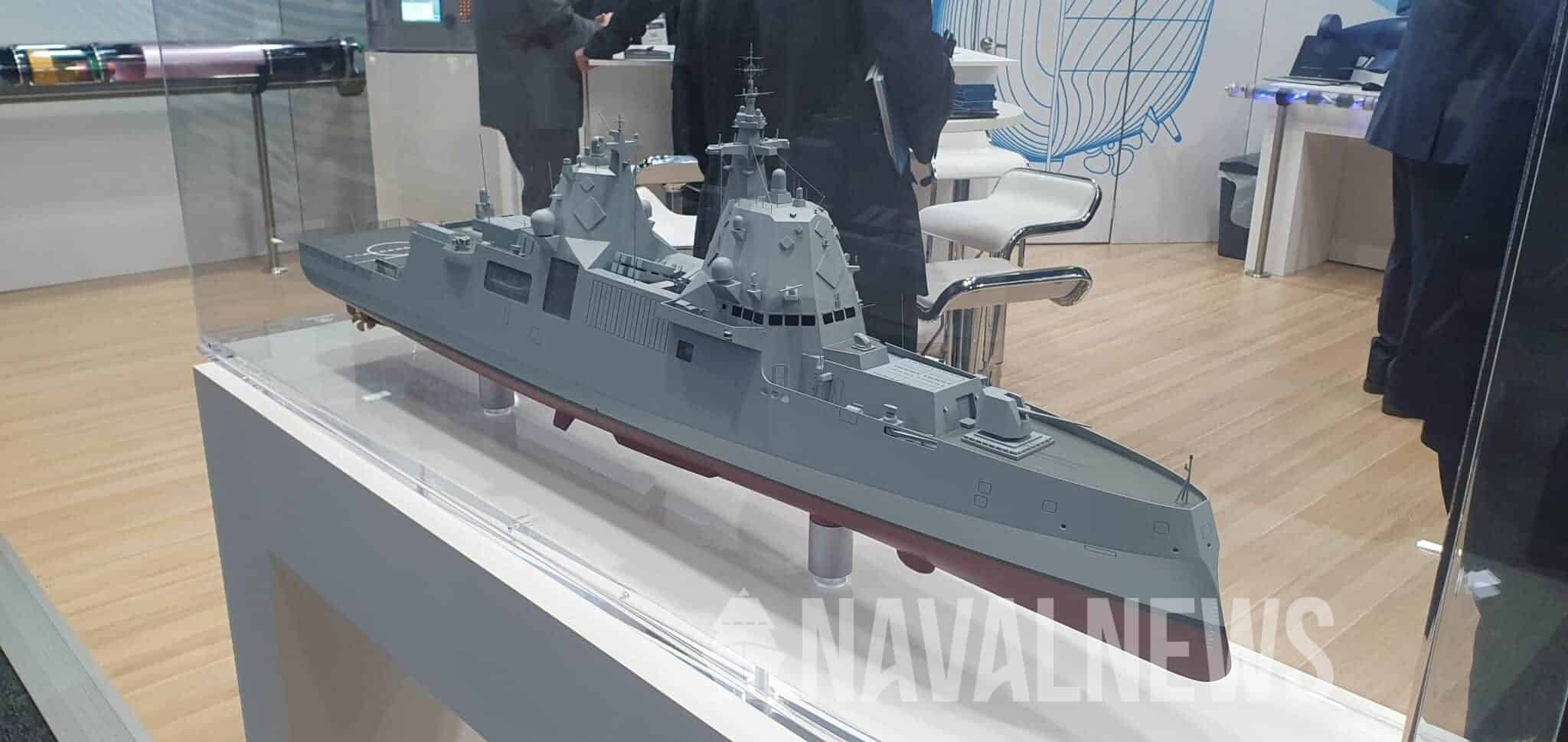
Old is New?

 
Just a bit of nonsense.  I was struck by a photo of a concept model of a MEKO A210 frigate. 
 
MEKO A210


Does anyone else think it’s reminiscent of the old Clemson class, 4-stacker destroyer?
 
Clemson Class Destroyer


Maybe it's just me?

Thursday, November 9, 2023

Artificial Intelligence

Artificial intelligence (AI) seems to be the future of warfare or, at the very least, a major component of it.  Heck, we already have it to varying degrees and have for many decades.  What we need to address is what level of control we cede to AI, under circumstances, to what extent to do we allow it to replace our human actions, and what degree of ultimate control do we maintain over it?
 
Before we go any further with this discussion, we need to define what AI is.
 
At the most simplistic level, AI is nothing more than machine (programming) logic which takes inputs (for example, sense an enemy), performs calculations and analysis, and generates outputs (for example, shoot the enemy) without requiring any human action.  This can be as simple as an air to air missile which senses a heat source (input), calculates an intercept course (calculation), and flies toward it (output) and then senses the proximity of an object (input) and detonates an explosive (output).  This level of AI is very basic but very efficient and effective.  We’re all comfortable with this level of AI and have no moral qualms about using it.  Of course, one hopes that the heat source was enemy rather than friendly although accidents have occurred.
 
At the other end of the spectrum is the Terminator (from the movie series) AI which has all the thinking capability of a human enhanced by electronic sensors and processing speed.
 
Currently, our technology lies In between the two extremes.  We have some fairly advanced input and analysis chaining (conditional algorithms that attempt to consider and evaluate multiple inputs) leading to condition-based outputs.  We do not, however, come anywhere near Terminator AI.
 
Consider a recent example of flawed AI in which an auto-driving vehicle was involved in an accident (precipitated by another human-piloted vehicle) and, after the event, chose to drive to the side of the road, dragging the injured pedestrian twenty feet and stopping on top of the person’s leg where the person remained trapped until responders were eventually able to free them.  Even the dumbest human driver would have known to not move until the injured pedestrian was located and clear.  This illustrates just how far we are from true AI even in a situation that an ordinary person would deem simplistic and with only one viable action:  remain motionless until the pedestrian’s location can be ascertained.[1]
 
 
Let’s look at some of the arguments for and against AI and caveats regarding its use.
 
 
Arguments for AI
 
Accuracy.  Human oversight is often detrimental and harmful.  The Vincennes incident occurred only because humans were ‘in the loop’.  The AI (Aegis) had correctly identified and assessed the situation but humans came to a different, incorrect conclusion.  Had we allowed the AI to operate without oversight, the incident would not have happened.
 
Speed.  Human assessment is too slow for the modern battlefield.  When an enemy missile appears at the horizon, traveling at Mach+ speed, there is no time for human decision making.  Only AI can react with sufficient speed.  If we’re going to send unmanned ships out onto the naval battlefield, we need to grant them full authority or we degrade their effectiveness. 
 
Ethical Disadvantage.  Enemies will ignore collateral damage and unintended consequences.  China and Russia, among others, will not hesitate to turn AI systems loose without regard to civilian casualties or even friendly fire.  Countries that have embraced human wave attacks and massive citizen murders will not be particularly squeamish about the possibility of unintended lethal effects if it means they can accomplish their objectives.  If we do not embrace AI we will be at a significant disadvantage.
 
 
Arguments Against AI
 
Dependency.  We run the risk that the use of AI will degrade our innate human abilities.  For example, we’ve seen that the use of GPS has resulted in a dependency/addiction to GPS and resulted in a loss of our ability to navigate and locate without it despite having done so for thousands of years prior.  This has already been a factor in multiple ship groundings and collisions. 
 
Similarly, dependence on AI will certainly render our ability to think and analyze a lost skill.  We’ll come to depend on AI for our thinking and analysis and will be paralyzed and ineffective in the absence of it.  We’ve all witnessed the phenomenon of younger people who are wholly dependent on calculators or cash registers (calculators) to determine change.  They have zero ability to do simple arithmetic in their heads. 
 
It hardly requires any foresight to recognize that military leadership – already an ineffective and flawed group of thinkers – will quickly become dependent on AI if for no other reason than to absolve themselves of any hint of responsibility and accountability (blame).  Do we really want to cede our thinking to AI and become just the unthinking, physical hands for a computer program?
 
Novelty.  It is impossible to anticipate, and program for, every contingency.  Thus, at a critical but unexpected moment our AI may fail (the pedestrian dragging incident, for example).  Having become dependent on AI, how would we even recognize a flawed AI output (garbage in, garbage out)?  This is the Internet or calculator phenomenon.  If the Internet or a calculator says something, it’s assumed to be right.  We’ve lost our ability to evaluate the output for ourselves.
 
Susceptibility.  AI is just computer programming.  We’ve already seen that any computer or network can be hacked.  It would be foolish to depend on something that can be easily hacked/attacked.
 
 
Caveats
 
If we don’t allow full control by the AI we’re reducing its effectiveness.  Human oversight is simply too slow to allow an AI system to function at maximum effectiveness.  Our enemies will use AI to full advantage.  If we opt not to do the same, we’ll essentially be fighting with one hand tied behind our back.
 
 
Solution
 
Bounds.  We can maintain control of AI via bounded authority.  In other words, we can turn AI loose with full authority but limit the time or area of that authority.  For example, we can grant an AI system full authority for the next 24 hours and then the system defaults back to human control.  Or, we can grant an AI system full authority within a designated geographical area, outside of which the system defaults back to human control. 
 
The magnitude of the bounds would be determined by the degree of ‘faith’ we have in the AI and the degree of risk we’re willing to accept.  For example, do we have faith, based on previous experience and testing, that an AI weapon can distinguish between an enemy ship and a civilian one and are we willing to accept that a harmless fishing trawler might be attacked if it means we can sink an enemy ship?
 
 
____________________________

Monday, November 6, 2023

Essex vs. Ford Comparison

Here’s a quick, fun little comparison …
 
The USS Ford, CVN-78, was commissioned Jul 2017, some 76 years after the USS Essex, CV-9, was commissioned in Dec 1942.  The improvements in carrier combat capability over the intervening 75 years must be astounding!  Let’s consider a few of the stunning improvements.
 
Speed
Essex   30+ kts
Ford     30+ kts
 
Hmm … Well, no difference there.
 
 
Range
Essex   16,000 miles at 20 kts
Ford     Unlimited
 
Of course, for operational purposes, 16,000 miles is unlimited range since there are no 16,000+ mile missions so I guess there’s no practical difference there.
 
 
Anti-Air Armament
Essex   90 guns of various types
Ford     5 guns + 2 missile launchers of various types
 
While a direct comparison of anti-air weaponry is pointless, the density of available weapons is quite pertinent and a WWII Essex puts a modern carrier to shame.
 
 
Air Wing
Essex   100 combat aircraft [1]
Ford     44 combat aircrafta (65 total aircraft counting helos, EW, and AEW)
 
a Available combat aircraft is around 36 since many are used as tankers
 
Well, that’s surprising.  Today’s carrier seems to have less than half the air wing combat capability of a WWII Essex. 
 
Essex - Greater Combat Value


Conclusion
 
Do you find it a little disturbing that the combat capability of our aircraft carriers has not improved since WWII and, in fact, the only really important characteristic, air wing size, has markedly decreased? 
 
Further, when factoring in the construction cost,
 
Early Essex      $40M  ($750M in 2023) [2]
Late Essex        $78M  ($1.33B in 2023) [2]
Ford                  $16B+
 
the Ford represents a staggering decrease in combat value for the dollar.
 
It’s clear that our carriers have become less combat effective over time.  I know that some of the less enlightened among you will attempt to say that a Ford can strike from a longer distance and with more precise, devastating weapons.  Well, first, that’s a reflection of the air wing, not the carrier and, second, that’s an absurd comparison.  The proper way to compare between WWII and today is to do so relative to the time period and the threats that existed during that period. 
 
During the Essex’s time, our carriers overmatched enemy forces, whether ship or land based, by a significant margin.  The 100 aircraft (Hellcats, Corsairs, Avengers) per carrier were far superior to enemy aircraft.  The carrier could operate with near impunity anywhere it wanted. 
 
In contrast, modern carriers are significantly inferior to land based forces (aircraft, missiles, etc.) and we acknowledge that we can’t operate them too near enemy forces.  Our 36 combat aircraft (Hornets) per carrier are, at best, on par with enemy aircraft and, more realistically, a bit less capable than enemy aircraft.
 
Despite nearly eighty years of development, today’s carriers have less combat value than a WWII Essex.  That’s disappointing and a damning indictment of Navy leadership.


______________________________

Thursday, November 2, 2023

What’s Old is New Again

The cruiser’s six 8” guns trained and elevated, aimed at an uninhabited piece of rock rising from the ocean.  The guns paused, ever so briefly, and then roared as a salvo of six 260 lb high capacity (HC) shells exploded out of the barrels and arced towards the rocky target some 30,000 yds (17 miles) away. This was just a routine daily function check but within the next 24 hours it would be real.
 
8" Guns of the USS Des Moines


The US and China were at war after China had initiated the long anticipated ‘reunification’ assault on Taiwan.  The two sides were now locked in an ongoing battle for Taiwan that was eerily reminiscent of Guadalcanal as both sides sought to reinforce the island.  While it might not be Ironbottom Sound, the waters to the east and west of the island were littered with the sunken hulks of dozens of naval vessels of both sides.
 
As part of the invasion, China had seized the large northern Philippine island of Luzon and established naval and air bases on the northern Philippine islands, thereby protecting the southern flank of their Taiwan assault.
 
The US was determined to eliminate the Philippine bases and sites so as to open the southern flank of the Taiwan invasion to counterattacks.  The mission cried out for massive cruise missile strikes but the US cruise missile inventory had been severely depleted during the first four weeks of the war.  Though it should have been easily anticipated, it had come as a shock to the Navy that much of the missile inventory depletion had been the result of ships being sunk with most of their inventory still aboard and so it was that much of the Navy’s cruise missile inventory was sitting at the bottom of the ocean in unexpended VLS cells on sunken ships.  Any available cruise missiles were dedicated to the main Taiwan defensive effort and, as a result, there were none available for the Philippine operation.
 
The Chinese bases in the Philippines were heavily defended by SAM batteries and aircraft and the few US aircraft attacks had been failures.  As with the cruise missiles, the bulk of available US aircraft were dedicated to the immediate Taiwan action and only an occasional raid could be mounted against the Philippine bases.  China was managing to rebuild and repair the bases almost as quickly as the US could inflict minor damage.
 
With insufficient cruise missiles, and industry being unable to supply new stocks in any useful time frame, the US decided to attack the Chinese forces in the Philippines using the old fashioned method of large caliber naval guns, an option made possible by the recent – and much maligned - construction program of a small class of 8” gunned cruisers.
 
A task force of 8” gunned cruisers and Burke escorts was assigned to approach the Philippines from the southeast while a carrier group provided an electromagnetic ‘beacon’ to the northeast as a diversion.  By working its way up the Philippine islands, the cruiser task force was hidden, to an extent, in the electromagnetic shadow of the islands.  Along with strict EMCON, the cruiser group was as well hidden as was possible.
 
The task force cut across the Philippines south of Leyte, through the Surigao Strait, then north into the Visayan Sea and then west to emerge around the southern tip of Mindoro, 150 miles south of Manila where the Chinese were operating a large logistics and naval base.  The group then headed north, hugging the coast of Mindoro until reaching the small island of Lubang and rounded it on the eastern side, finally emerging just 60 miles south of Manila.
 
At this point, the escorting Burkes split off from the cruisers and proceeded at full speed for Manila, tasked with shooting up the various port facilities and ships and, most importantly, to act as bait for the main Chinese naval force tasked with protecting the Taiwan assault’s southern flank.
 
About 30 minutes into the Burke’s high speed dash for Manila, they were finally spotted by a patrolling plane which was approaching Manila to land after returning from a patrol.  Having finally succeeded in attracting the Chinese attention, one of the Burkes promptly activated its radar and shot the plane down with a Standard SM-6.  The entire group then began radiating and shooting any aircraft that appeared, thereby ensuring that the Chinese would take notice and respond.


The Chinese task force protecting the Philippines and the southern Taiwan flank and operating about 300 miles to the northwest of Manila, was surprised at the reported appearance of a US surface group closing on Manila.  They immediately turned south, racing to meet the US destroyer group but it would be about two hours before the Chinese group would be close enough to launch their few anti-ship cruise missiles.  China was suffering from the same shortage as the US although superior industrial production allowed them to allocate at least a few cruise missiles to the Philippine portion of the invasion operation.
 
Arriving at Manila, the Burkes sailed into Manila Bay.  A Chinese Type 052D destroyer (roughly equivalent to a smaller Burke) was docked, undergoing emergency repairs from damage received supporting the Taiwan assault.  The Burkes spent about ten minutes concentrating their 5” fire on the helpless destroyer but had no weapons capable of quickly sinking the ship, however, their concentrated fire did leave the ship a blazing hulk.  Having accomplished that, they quickly shifted their focus to other targets.
 
Dozens of merchant ships of various types lined the docks and piers but, again, lacking heavy torpedoes or large caliber guns, the Burkes could not do serious damage to them and opted, instead, to concentrate on the shore facilities.  The facilities, being largely ‘soft’ targets were susceptible to 5” gunfire but the fact that the Burkes only had a single 5” gun each severely limited the amount of damage they could do.  Nevertheless, the Burkes moved as close as possible to the shore, shooting targets of opportunity with their 5” guns at near zero range. 
 
As the Chinese task force reached its maximum launch range of around 250 miles the commander faced a difficult tactical choice:  should he shoot his limited supply of anti-ship cruise missiles first with a good general location of the targets but no precise targeting or wait until he had precise targeting and risk the US getting in the first shot?
 
The commander opted to shoot first, believing that the missile’s on-board intelligence would find and prioritize the targets.  Better, he thought, to get in the first shot, even if it was less effective than it might be if he waited. 
 
About three dozen of YJ-18 anti-ship cruise missiles were quickly launched and began their 20 minute, Mach 0.8 cruise toward the US ships in Manila.
 
Having received a near real time launch warning from one of the few remaining dedicated surveillance satellites, the Burkes used the intervening fifteen minutes to release floating decoys into the harbor and then, literally, sailed up against port facilities, physically touching docks and shore facilities as they waited for the incoming missiles to arrive.
 
As the attacking missiles reached the target area and began their Mach 2+ terminal sprint, their electronic brains were confused and overwhelmed by the many dozens of decoys and ships of all types in their fields of view.  Worse, their IR and Electro-optical sensors were overwhelmed by the sheer number of heat sources and large, potentially valid images presented by the burning buildings and port facilities.  The terminal Mach 2+ speed worked against the missiles by hugely reducing the amount of time the missile’s onboard processors had to discriminate the intended targets.  In the handful of seconds the missiles had to find a target, only one missile locked on to a Burke (probably just by random chance).  The missiles began impacting on merchant ships and dock facilities.  The single targeted Burke launched two ESSM defensive missiles, one of which exploded near enough to deflect the attacking missile into the water.
 
After launching their anti-ship missiles, the Chinese task force continued at high speed towards Manila to mop up whatever US destroyers survived the initial attack.  Having survived the Chinese attack unscathed, the US destroyer group opted to remain in the harbor rather than emerge to meet the on-coming Chinese task force.  This denied the Chinese ships any clear targeting and forced them to close to visual distance for identification and targeting for both anti-ship missiles and the Chinese 130mm (5.1”) guns.
 
As this was happening, the US cruiser group had been sprinting up from the south at maximum speed.  The Chinese commander, his attention completely focused on the US destroyers and the battle in front of him, did not detect the cruisers approaching from his rear.  His sensors, helos, and UAVs were all directed towards the destroyers he believed were now trapped in Manila harbor.  The first inkling he had of the presence of the US cruisers was the sudden sprouting of enormous water columns as the initial 8” salvos arrived from about 20 miles away.
 
The Chinese group was now caught between the rapidly closing cruiser group to the south and the island to the north.  There was nowhere to run and any attempt to do so would only grant the US cruisers, with their longer ranged guns, a sustained range advantage.  The Chinese commander turned toward the cruisers, attempting to close to within gun range of his ship’s 130 mm guns.  Outranged and having expended all their anti-ship missiles in the failed attack on the Burkes, the Chinese ships were reduced to firing surface to air missiles in surface mode until they could close the range.
 
A few of the missiles got through the ship’s defenses but the cruiser’s extensive armor and redundant systems mitigated damage to little more than an annoyance.  The cruiser’s fire control sensors, in particular, were redundant several times over and the loss of an occasional sensor caused no problem.  The Chinese would get no easy mission kill by disabling the cruiser’s sensors.
 
As the opposing groups continued to close, the naval gun battle that the US Navy (and, to be fair, the rest of the world) believed could never occur, took place.  Each US cruiser was armed with three dual 8” gun mounts totaling 6 guns per ship.  Each cruiser, firing 10 rds per minute per gun, rained 60 shells per minute on its selected target.  Within minutes, 8” hits were carving out huge chunks from the thin-skinned Chinese destroyers.  The Chinese, firing at extreme range, registered hits but, as was the case with the missiles, the 5” shells did little significant damage to the heavily armored US ships.  In contrast, the Chinese ship’s unarmored 130 mm guns, protected only by thin weather shields, were quickly put out of action by simple shrapnel and the Chinese ships were rapidly rendered toothless.
 
The US destroyers, by remaining inside the harbor, eliminated the possibility of friendly fire concerns and the cruisers were free to fire at any target they could detect.  This kind of simple battle plan eliminated the otherwise certain confusion of identification in battle and ensured the cruiser’s maximum effectiveness.
 
By the time the cruisers closed to within a few miles, there was nothing left of the Chinese task force except a few burning, sinking hulks.
 
With the Chinese task force eliminated, the Burkes rejoined the cruisers and the task force began its main mission of shelling the various Chinese bases, weapons, and sensors in the area, to devastating effect.
 
Using numerous, small cruiser-launched UAVs for reconnaissance, the task force deliberately trolled for shots from the Chinese thereby enabling the cruiser’s counter-battery radars to pinpoint any sites that were previously unknown.  The sites, both artillery and missile, that attempted to fire on the task force were quickly silenced by the cruiser’s counter-battery capabilities which almost instantly dropped a rain of 8” shells on the offending sites. 
 
While the cruisers were kept busy methodically eliminating Chinese sites, the escorting Burke AAW destroyers provided a protective anti-missile umbrella for the group. 
 
For thirty hours, the group rampaged along the various coastlines, expending their nearly 1000 shells per cruiser and opening the southern flank for US forces to counterattack the Taiwan assault.


________________________

Disclaimer:  As always (and always ignored!), this is not a true combat simulation.  It is simply a more entertaining way to illustrate various points.
 
________________________ 


Points of discussion:
 
  • Depletion of cruise missile inventory in the first few weeks of war and the inability to replenish in any useful time frame is a vital aspect of any future war and one that is ignored by the Navy and overlooked by most analysts and yet will have profound impacts on strategy, operations, and tactics.  This story attempts to illustrate the issue and provide one consequence and adaptation.
  • Missile inventory loss due to sunken ships is another factor that is ignored by the Navy.  How many VLS cells should a ship have?  Where’s the balance between enough missiles for operations and too many, leading to inventory loss on sinking?  WWII ships were generally sunk with most of their shells unexpended in their magazines but the cost of replacement was low and the time required was short so the inventory loss due to sinking was acceptable.  Is that the case today?
  • In the story, guided gun rounds were ignored which, if they existed, would make the naval guns all that much more effective though at an increased cost.  Is guidance worth it?  We’ve seen we can’t maintain a sufficient guided missile inventory due to cost so why would we think we can maintain a sufficient guided, large caliber, naval shell production rate?  In the story, most rounds were expended against area targets which, again, leads one to question the value of guided rounds.  Guided shells specifically for anti-ship use might be warranted although one has to wonder what form of guidance would be practical during ship-to-ship combat?
  • The tactics presented in the story are a sharp departure from anything the Navy practices in its set-piece, worthless exercises.  We must begin exercising our tactical minds and expanding our tactical thinking.  Of course, this requires realistic exercises with free-thinking participants instead of exercises whose sole purpose is checking a box on a pre-deployment workup sheet or validating a pre-determined outcome and conclusion.

Monday, October 30, 2023

Worst Developments Ever

Focusing on the equipment side of things as opposed to policy debacles such as minimal manning, here are the worst modern naval developments.  I’m defining ‘worst’ as something that initiates a harmful trend and whose negative impact is felt across decades and multiple ship classes.  Thus, the LCS, for example, does not qualify.  It was an unmitigated disaster but it did not propagate across time and classes. 
 
All of these will be surprising to the reader and most will be controversial.  Nonetheless, they are true.
 
 
Mk32 Triple Torpedo Launcher – deprived surface ships of heavy torpedo, ship-killing capability and ended any effort towards a ship launched heavy torpedo
 
Aegis – ushered in the era of electronic systems that are too complex to be maintainable and, almost by definition, are perpetually degraded
 
Spruance – initiated the practice of industry design of ships and resulted in the elimination of in-house ship design expertise in the Navy
 
Surface Ship Nuclear Power – offers no overall tactical or operational benefits, imposes a severe battle damage risk, and initiated (or significantly contributed to) the spiraling runaway costs of ship construction
 
VLS – significantly reduced ship’s ability to stay in a fight due to the extreme risk of clustering all weapons in one or two tightly packed, unarmored locations
 
Burke Class – has frozen naval surface ship development and instituted a decades long slide into obsolescence (see, “Burke – The Anchor Around the Navy’s Neck”);  impact includes the Constellation class which was obsolete from the moment it was conceived as an attempt to produce a safe mini-Burke
 
GPS – ushered in a culture of technology dependency which has cost lives, caused collisions and groundings, rendered a generation of weapons suspect, and neutered the basic seamanship skills of the Navy