Friday, August 10, 2018

Their Lips Move

What’s the old joke?  How can you tell when the Navy is lying?  Answer - Their lips move.

If they’re speaking (or writing), they’re lying.  It’s become that simple.

The latest example is a Department of Defense Inspector General (IG) report (1) that states that the Navy fraudulently declared Initial Operational Capability for three mine countermeasures (MCM) components of the LCS MCM mission module.  The MCM components the IG reviewed are

  • AN/ASQ‑235 Airborne Mine Neutralization System (AMNS)
  • Airborne Laser Mine Detection System (ALMDS)
  • Coastal Battlefield Reconnaissance and Analysis (COBRA) Block I
Here’s the blunt statement of finding by the IG.

The Navy declared IOC for the three MCM mission package systems reviewed prior to demonstrating that the systems were effective and suitable for their intended operational uses.

Here’s what out and out fraud sounds like,

We [IG] determined that N95 declared IOC for the COBRA Block I to avoid requesting a sixth change to the IOC date that would further delay the delivery …

Note:  N95 is Major General David W. Coffman, USMC, Director, Expeditionary Warfare (N95)

The DOD-IG is not alone in criticizing the MCM’s ALMDS and AMNS components.  A June 2016 DOT&E (Director Operational Testing & Evaluation) report states,

… the MH-60S helicopter with the current ALMDS and AMNS units would not be operationally effective or suitable to conduct mine countermeasure operations.

“Not operationally effective or suitable”?????  That’s saying it’s useless.

What does all this mean?

As a result, the Navy has delivered units that have known performance problems to the fleet …

Since declaring IOC, the Navy has delivered two ALMDS, one AMNS, and one COBRA Block I units to the fleet with known performance problems …

So, despite all the problems, the Navy is knowingly and intentionally fielding flawed equipment.  This violates the trust of the nation and the trust of the sailors in the fleet.  CNO Richardson needs to be relieved for loss of confidence in his ability to command.


_____________________________________

(1)Department of Defense, Inspector General, “Acquisition of the Navy’s Mine Countermeasures Mission Package”, Report No. DODIG-2018-140, 25-Jul-2018


Thursday, August 9, 2018

C-130 Hercules Carrier Landing

Here’s an interesting bit of carrier and aviation history.  The A-3 Skywarrior is the largest naval aircraft to operate routinely off a carrier deck but larger aircraft have landed and taken off.  One such example was the C-130 Hercules which landed without an arresting hook and took off without a catapult – and did so with room to spare!

The experimental landings and takeoffs were part of an investigation into the use of supersized aircraft for logistics support.  The choice of the C-130 was fairly obvious given its excellent flight characteristics, stability, range, and cargo capacity.  The event took place on 30-Oct-1963 on the USS Forrestal (CVA-59) in the North Atlantic a few hundred miles off Boston.

As described in a Aviationist website article, the C-130 was only slightly altered.

Lockheed’s only modifications to the original plane was a smaller nose-landing gear orifice, an improved anti-skid braking system, and removal of the underwing refueling pods. (1)

The test was not just a one-time, lucky event.

The initial sea trials started on Oct. 30 1963 and were conducted into a 40-knot wind: however the crew successfully performed 29 touch-and-go landings, 21 unarrested full-stop landings, and 21 unassisted takeoffs at gross weights of 85,000 pounds up to 121,000 pounds. (1)

So, how did the aircraft perform?

At 85,000 pounds, the KC-130F came to a complete stop within 267 feet …

The Navy discovered that even with a maximum payload, the plane used only 745 feet of flight deck for takeoff and 460 feet for landing.

These achievements were confirmed by Lockheed’s Ted Limmer, … “The last landing I participated in, we touched down about 150 feet from the end, stopped in 270 feet more and launched from that position, using what was left of the deck. We still had a couple hundred feet left when we lifted off.” (1)


C-130 Operating From USS Forrestal


What was the ultimate conclusion?

The analysis of data collected by the U.S. Navy during the tests highlighted that the C-130 Hercules could carry 25,000 pounds of freight, fly for 2,500 miles and eventually land on a carrier. However, the procedure was considered a bit too risky for the C-130 and the Navy decided to use a smaller COD aircraft. (1)

We tend to forget just how much was accomplished and how much is possible today.  Reminders, such as this, help us recall what we were once capable of.

Hmm ………..  V-22 Osprey COD or C-130 Hercules COD?  I know which I’d want!


Note:  If you're interested, there are videos of the event readily available on YouTube.


____________________________________

(1)The Aviationist website, “Look Ma, No Hook: how a C-130 Hercules managed to land on an aircraft carrier”, Dario Leone, 16-Jul-2014,


Tuesday, August 7, 2018

Profits Versus Performance

This is an updated version of a previous post about the objectives of the defense industry.  I’ve recently seen a steady stream of offerings and advice from industry and they all have a common theme:  they’re good for industry.  Here’s a small sampling.

  • Boeing is pitching upgrades to – surprise! – its F-18E/F Super Hornet.

  • Boeing is pitching upgrades to – surprise! – its F-15, referred to as the F-15X (1). 

  • Lockheed is proposing a new frigate based on – surprise! – its LCS.

  • Austal is proposing a new frigate based on – surprise! – its LCS.

  • Bell Boeing has proposed variants of – surprise! - its V-22 Osprey for

-          the Navy’s carrier delivery aircraft, CMV-22B
-          airborne early warning and control, EV-22
-          combat search and rescue, HV-22
-          anti-submarine warfare, SV-22

  • Northrop Grumman Ship Systems has proposed variants of – surprise! - its LPD-17 for

-          ballistic missile defense
-          a hospital ship
-          the future amphibious ship LX(R)

  • Raytheon has proposed upgrading – surprise! – its Tomahawk missile for the anti-ship missile role.

So, what’s wrong with upgrades and new variants?  Nothing, per se.  The problem lies in the fact that these companies are not suggesting the best military solution – they’re suggesting the best corporate profit solution. 

Is the V-22 the best military solution for an airborne early warning and control aircraft?  Almost certainly not.  Is the EV-22 the best corporate profit solution for Bell Boeing?  Absolutely!

Is the LPD-17 the best military solution for the LX(R)?  Almost certainly not.  Is it the best corporate profit solution for Northrop Grumman Ship Systems?  Absolutely!

Of course, it’s quite possible that a proposed upgrade/variant IS the best military solution in which case the military benefits to the maximum degree possible and the corporation profits.  Win-win.  Unfortunately, the instances of the military and corporate needs meshing like that are few and far between.

The problem is not just limited to upgrades.  New equipment is being proposed that follows the same model of maximum profits for the corporation.

For example, Raytheon is proposing a new concept in “Multi Domain Battle Management” for the military (2).  This would be a massive, integrated software decision making/assistance tool for military combat leaders.  The problem is that it’s highly likely that the proposed tool is not the best tool for the military but, instead, it’s the most profitable tool for Raytheon.

Bell is heavily pushing the V-280 tiltrotor for transport, gunship, and other roles.  Is it the best platform for each of those roles?  Unlikely.  Is it the most profitable for the company?  Certainly!

So, what does this all mean?

First, it means that the military needs to firmly understand that when industry proposes something, that something is, first and foremost, in the corporation’s best interests.  There’s nothing wrong with this.  In our free market system, attempting to maximize profits is what corporations are supposed to do.  As long as the military recognizes this they can make intelligent decisions about whether they want the proposed item.

Second, it means that the best military solution may never be offered by industry if it isn’t in some corporation’s best interest.  Thus, the military needs to understand what the best solution is before they entertain corporate proposals.  This is one of our major failings.  Having allowed so much of our in-house engineering expertise to lapse, the military often lacks the ability to know what the best solution is and depends on industry to tell them.  Of course, as we’ve just discussed, industry won’t provide the best solution, they’ll provide the most profitable solution.  The abandonment of in-house expertise is a major mistake and needs to be reversed.

For example, no one inside the Navy had the engineering expertise to recognize that the combining gear on the LCS was far too complex to be reliable or to be safely and reliably operated by standard crews.  As a result, the first several LCS’s all suffered very similar breakdowns related to the combining gear.

For example, no one in the Navy had the expertise to recognize that the Ford’s EMALS catapult was inherently flawed since, by design, the catapults could not be repaired individually.  Instead, the entire system has to be electrically “wound down” in order to service any one of the cats.  This is a major flaw in a combat system.

For example, no in the Navy had the expertise to recognize that the Zumwalt’s LRLAP munition for its gun was heavy on promises and very light on technical feasibility.

And so on.

To repeat, the Navy has to enter into industry discussions already knowing the best answer.  Anything less is heading down the path to failure.

CNO Greenert once stated that he was excited and couldn’t wait to see what industry would give the Navy in the future.  What an idiot!  You should know what you want and you should be telling industry what you want, not accepting whatever they’ll give you based on their bottom line.

We have got to stop depending on industry to lead our military development.  This means that we need to re-establish in-house technology and design expertise.  Failure to do so means we’ll be doomed to an unending succession of sub-par weapon systems.


___________________________________________

(1)DoDBuzz website, “Boeing Pitches 'F-15X' Fighter Concept to US Air Force: Report”, Oriana Pawlyk, 19-Jul-2018,


Sunday, August 5, 2018

Do The Math - Follow Up

The “Do The Math” post produced some interesting comments.  Some people insist on concocting highly implausible (impossible) scenarios to cause depletion of the ships’ missile inventory and then cite that as proof of the need for reloading at sea capability.  Well, there’s one further aspect that no one is considering and that is the mechanics and rate of reload at sea.

For the sake of discussion, let’s assume that, in some impossible way, our ships find themselves in an on-going battle that has depleted their inventory of thousands of missiles – or a single ship has depleted its inventory of hundreds of missiles – and desperately in need of reloads.  Where are these reloads going to come from?  Obviously, they’re going to come from a resupply ship.  So, setting aside the issue of insane risk to an incredibly valuable resupply ship so close to a mega-battle, let’s assume that there is a momentary pause in this mega-battle and we’re going to reload.  There’s one incredibly important question:  how long will the reload take?

If you’ve ever seen a video of VLS loading, you know it’s a very delicate, very slow procedure due to the incredibly tight tolerances.  I’ve watched videos and it’s like looking at a still picture, it moves so slowly – and that’s on land.  Now, imagine doing this at sea.  Even with cranes or mechanisms that compensate for the ship’s movement, there is still shifting of weight and the process is still very slow and delicate.  I would guess that we’d be lucky to load one cell per hour.  For a Burke with 96 cells, that means it would take 96 hours – 4 days - to reload and that’s working non-stop for four straight days.  How is this relevant or useful in the on-going, mega-battle scenario?

But wait, it gets worse!

Where are the missiles that need to be loaded?  They’re on the resupply ship, of course!  That means they need to be transferred, one at a time, to the ship.  Canister weights are on the order of 3000 lbs (1).  That’s not something that gets hauled out of storage from the resupply ship and tossed over the side to someone on the receiving ship to catch!  That’s a slow, delicate transfer process itself.  I have no idea what the transfer rate would be but it can’t be fast.

VLS Cell Loading - Slow!


Further consider that the resupply ship and loading ship would have to be tethered together the entire time of the reload process.  The receiving ship has no storage space to pile up canisters even if they could be transferred faster than they could be loaded.   Can you imagine, during a mega-battle, a ship and a resupply ship sailing, tethered together, on a straight, slow course for four days?

Well, you say, the reloading ship would just withdraw to a safe distance to reload.  With modern missile warfare, a safe distance is hundreds of miles.  If that’s the case, they may as well return to port!

So, at best, we can reload one ship, using one dedicated resupply ship, every four days.  Does that sound operationally useful?  No, it doesn’t.  Hey, related note, how many resupply ships does the Navy have?

There’s also the issue of canister movement aboard the loading ship.  Transferring the canister is just the first step.  The receiving ship has to have some means of moving the 3000 lb canister from the transfer point to the VLS loading mechanism.

The problems just go on and on.

I think it’s past time to let the reload at sea idea, die.


_____________________________________


Friday, August 3, 2018

Ship Magazines - Do The Math

One of the recurring fears among some naval observers is the inability to reload VLS systems at sea.  We’ve just recently debunked the concern but the fear lingers (see, "War Deployments").  Well, here’s yet another perspective on the issue that proves reload capability is not needed:  the math!

A carrier group, for example, will consist of 3-4 carriers (4 is ComNavOps preferred number) and 20+ escorts (25-30 being ComNavOps preferred number) (see, "Carrier Task Force").  Let’s assume that each escort is a Burke with 96 VLS cells and that 50 are Standard missiles, 30 are quad packed ESSM, and the remainder are Tomahawks and VL-ASROC, neither of which are relevant to this discussion.

So, let’s do the anti-air warfare (AAW) math.


Standard Missiles:  20x ships X 50 Standards per ship = 1,000 Standard missiles

ESSM Missiles:  20x ships X 30 cells X 4 ESSM/cell = 2,400 ESSM missiles

Total = 3,400 AAW missiles


This ignores any SeaRAM point defense missiles the group might have.


So, in order for reloads to even be required, the group would have to fire off well over three thousand missiles!  Given that the enemy’s anti-ship missile inventory is limited just like ours, does anyone really believe a single battle will see the enemy bring over three thousand anti-ship missiles to bear on a single carrier group????

Let’s do some more math.  The average modern warship carries somewhere around 8 anti-ship missiles and possibly up to a dozen or two.  For sake of discussion, let’s use the higher number of 24.  How many ships would be needed to launch three thousand missiles?  Well, 3000 missiles / 24 missiles per ship = 125 ships.

The enemy would need to assemble a force of 125 ships to launch 3000 anti-ship missiles!  No navy in the world can do that and even if an enemy had that many ships it couldn’t assemble that many in range in time.  A reasonable assembly of enemy ships opposing a carrier group might be 12-24 which would give an anti-ship missile inventory of 96 – 576.

Well, you say, the enemy can also launch anti-ship missiles from aircraft.  Yes, yes they can!  Let’s assume, say, 4 anti-ship missiles per aircraft – I know, there are some aircraft that can theoretically carry more but the impact on aircraft range and endurance is significant and that load would be uncommon.  So, 4 missiles per aircraft is a reasonable average.  Thus, the number of aircraft needed to launch over 3000 anti-ship missiles is, 3000 missiles / 4 missiles per aircraft = 750. 

The enemy would need to assemble, in short order, a force of 750 aircraft (of the right type!) to deplete our carrier group’s defensive missile inventory!  Not possible.

Of course, this analysis is simplistic.  Defending missiles aren’t launched one-for-one at attacking missiles.  A ratio of 2:1 is more realistic.  That means that the defending force in our example can only engage 1,700 attacking missiles.  Go ahead and rerun the math.  That’s still way, way beyond the attack capacity of any actual enemy.

A more realistic scenario is a single engagement with, perhaps, a dozen surface ships and/or a few flights of 10 or 20 attack aircraft.  Of course, the attackers would have to get past the carrier’s defensive aircraft before missiles even come into play but we’ll ignore that aspect.  We see, then, that a realistic scenario likely involves only a few to several dozen attacking missiles versus the defensive inventory of over 3000 missiles.  Depletion of the ship’s missile inventory is simply not conceivable and, therefore, reloading at sea is not a requirement.

Recall the old Soviet attack plan against US carrier groups?  Regiments of bombers would launch a couple of anti-ship missiles each for a total of 70+ attacking missiles.  Again, not even remotely near depleting the ship’s defensive missile inventory.


Here are the salient points to keep in mind regarding ship’s missile inventories.

  • The enemy’s inventory of attack missiles is just as limited as a ship’s inventory of defensive missiles.

  • Assuming even a small amount of surprise, the enemy has to assemble their attacking forces with little notice and can only bring a small fraction to bear in time.  This assures that attacking missile numbers will be small and manageable.

  • Ship’s don’t just stand in one spot and slug it out.  They appear, execute a mission, and retire.  Typical missions (the combat portion) last hours or a few days.

  • Ships don’t fight individually, they fight as groups and it’s the group’s missile inventory that matters.


Missile depletion is simply not a concern and, therefore, at-sea reloading is not a requirement.


Wednesday, August 1, 2018

UAVs - Numbers Matter

ComNavOps has frequently pointed out the disconnect between the Navy’s dependence on UAVs for reconnaissance, surveillance, and targeting and the utter lack of survivability of UAVs over a modern, peer-contested battlefield.

For example, the Navy believes that individual ships with very short range sensor suites, like the LCS, will be able to conduct long range, anti-surface strikes using remote targeting provided by various slow, non-stealthy, non-maneuverable UAVs.  Would we allow the Chinese to use such UAVs to target us?  Of course not!  We’d casually shoot them down at our leisure and yet we’re basing an entire distributed lethalilty concept on these UAVs.

I’ve stated repeatedly - and I guess I just did again! – that UAVs are not survivable over the modern battlefield.  On the other hand, ComNavOps has also called for UAV carriers and vastly greater numbers of UAVs on various ships.  This would seem to be a contradiction.  Are UAVs useful on the modern battlefield or not?

The answer is yes – if we use them properly.  In fact, not only are they potentially useful, I’ll go so far as to say they’re absolutely vital.  All right, how do I reconcile my conflicting statements?  Well, I’ve already given the answer – it’s in the numbers.

Individual UAVs are not survivable but – and this is the key “but” – large numbers of UAVs are.

Want to scout that area for expected enemy ships?  Don’t send one UAV – it will get shot down before it can accomplish anything – send one or two dozen!  The laws of probability ensure that at least some will survive long enough to accomplish the mission.

Of course, this implies that the UAVs have to be cheap enough that we don’t care about the attrition rate which will be hideous.  Thus, the trend towards large UAVs like the MQ-4C Triton are a mistake.  We want cheap, throwaway UAVs. 

Unfortunately, cheap implies small which, in turn, implies limited range, endurance, and capability.  Fortunately, numbers can largely offset those disadvantages.

We can compensate for limited capability (meaning, limited sensor range and field of view) by using more UAVs to cover the same area.

We can compensate for limited range and endurance by using the UAVs as one-way, throwaway assets which doubles their “range”.  We don’t want to do this routinely but we shouldn’t hesitate to do so when the need arises.

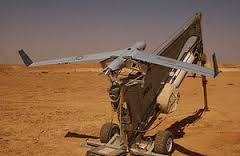
Small UAVs


We can also compensate for limited range by having the UAVs forward deployed instead of trying to operate them from some base far behind the lines.  By forward deployed, I mean deployed on every ship so that they start out as close to the enemy or the area of interest as possible. 

For example, a Burke or LCS with, say, 50 small, cheap UAVs can provide its own long range surveillance and situational awareness.  Sure, when contact is made with the enemy we’ll lose dozens of UAVs but with enough of them we can maintain situational awareness and generate the targeting data we need.

Now, you understand my call for UAV carriers.  These would be small, WWII escort size carriers or, perhaps, converted commercial cargo vessels with a minimal flight deck (it doesn’t require much deck space to launch and recover small UAVs) that would act as surveillance and targeting escort ships for surface groups.

We can accomplish surveillance and targeting with UAVs if we’re willing to accept the attrition.  Hence, numbers matter.

There’s another aspect to UAV numbers and that is the “Terminator” scenario – you know, the Terminator movie with lethal, autonomous robots attacking each other and humans.  Yes, Terminator – we’ve already crossed the line.  Every major country has already fielded air, land, and sea robots that are armed and we’re giving them more and more autonomy regarding killing.  Future wars will be fought with large numbers of robots indiscriminately shooting. 

However, as yet, they lack true AI and, therefore, numbers will matter.  The robots will be equally matched and the winner on the future battlefield will be the side with more robots.  Hence, numbers matter.

The takeaway from this is that we need to focus our design efforts on smaller, significantly cheaper unmanned vehicles.  For the Navy, this means small, cheap, expendable UAVs for surveillance and targeting in the near term.  Longer term, cheap, armed UAV swarms are the next logical step.  The Navy’s trend towards ultra-high end, sophisticated, ultra-capable UAVs is a mistake.  They’ll wind up being just as expensive as manned aircraft, if not more so, and we’ll be unwilling to risk them which defeats their purpose.


Navy, it’s time to go small or go home!

Monday, July 30, 2018

War Deployments

There are a couple of common complaints about US naval capabilities that stem from the same misunderstanding about how naval combat is waged.  Consider these common complaints,

  • Ships lack the ability to reload missiles at sea.  Thus, the Burkes, with 96 VLS cells will, after a few to several battles, be out of missiles and they and the ships they’re escorting will be sitting ducks, waiting to be sunk unless we can provide at-sea reloading.

  • We lack the needed 3 or 4:1 ratio to maintain useful numbers of forward deployed ships during war.  Among other applications, this seems to arise often in people’s calculations of required escort numbers.  For example, in previous posts and comments I’ve stated that carrier groups will need around 20-30 escorts.  People immediately apply the peacetime 3 or 4:1 deployment support ratio and instantly conclude that we would need 60 to 120 escorts just to support a single carrier group and that we don’t have, and can’t afford, enough escorts to even come close to filling our needs.

The misunderstanding that leads to these erroneous conclusions lies in how naval combat is waged.  Too many people seem to think that peacetime ship deployments will continue more or less unchanged during war.  Nothing could be further from the truth!  Ships will not deploy at all.  Every available ship will fight “continuously” for the duration of the war.  There will be no routine, scheduled, rotational deployments in and out of the war.

The history of naval combat is one of very brief missions and battles followed immediately by return to port for repair and replenishment.  Combat, both naval and land, is not continuous.  It ebbs and flows.  Forces gather, conduct recon, maneuver, commit to a battle, and then settle back into a “stagnant” period while they re-strategize, reorganize, repair, reassemble, replenish, and rest.  Eventually the cycle repeats itself.  This cycle is even more evident at sea than on land.

As an example, let’s take a closer look at how one ship, the USS Enterprise (CV-6), operated during the first, frantic year of WWII.  Below is a calendar of 1942 with the days blocked in red (at sea) or green (in port, mostly Pearl Harbor).  

During the year, Enterprise participated in strikes and battles at Kwajalein, Wake, Marcus Island, the Doolittle raid, Midway, Guadalcanal, Eastern Solomons, and Santa Cruz.  A very busy year, indeed, and yet note the amount of time in port - roughly equal to the time at sea.  Also, note that the longest sea periods were only around 7-8 weeks as opposed to today's peacetime deployments of several months or more!  So, in the middle of the first desperate year of the war, the Enterprise still did not put to sea and stay there for extended periods.

As seen from the calendar, Enterprise did not deploy for months on end, as so many people seem to believe a ship would, and then rotate back to the US.  Instead, as with every other ship in the fleet, she put to sea for a few weeks at a time, executed a mission (strike or battle), and returned to port to repair, refit, and replenish.  Enterprise continued this pattern for the duration of the war.


Calendar 1942


Note:  Lacking complete ship's logs, a few sea/port days had to be guesstimated but 95%+ of the days are confirmed via data from various sources.

I apologize for the fuzziness of the image but the Blogger engine has only very limited graphics capabilities.


The widely held belief that ships will deploy during wartime is incorrect.  Every ship in the fleet will fight continuously in a pattern of brief missions and battles followed by returns to port.  The pattern is generally one battle followed by an immediate return to port. 

So, what are the implications of this pattern of naval warfare?

  • Reloading VLS cells at sea is unnecessary.  Ships will not be at sea or engaged long enough to run out their collective magazines. 

  • Peacetime forward deployment ship ratios of 3:1 or 4:1 simply don’t apply during war.  If you need 20 escorts for a carrier group then you only need 20 ships to support that effort.  Deployments are a peacetime artifact.

  • Upgrades will occur continuously, in theater, as new equipment becomes available.  Enterprise underwent two fairly major upgrades in 1942 alone and did so at Pearl Harbor, thereby remaining in theatre.  Ships will not need to rotate stateside for upgrades.  This strongly suggests the need for robust forward situated repair facilities and dockyards/drydocks.

  • Maintenance will be reduced to the bare minimum for the duration of the war.  This is not a problem since the Navy tends not to do required maintenance, anyway!  It does, however, strongly suggest the need for on-board maintenance and repair capability to the greatest degree possible.  Ships need machine shops and machinists, pipefitters, welders, electricians, etc.  Shore repair facilities will be in high demand and less critical repairs will have to be done by the ship’s company.  The trend towards minimal manning is flat out wrong.

  • Ships will not be continuously at risk.  Only during the course of a mission will significant risk occur.  Thus, risk can be managed through calculated exposure based on anticipated gain.

  • Ships will not stake out a chunk of ocean and just sit there.  Instead, ships will come and go on specific missions.  This suggests that the “sea control” concept is invalid.

This post clearly demonstrates that wartime operations bear little or no similarity to peacetime operations.  Naval analysts need to keep this distinction firmly in mind while considering combat operations, fleet size and structure, and forward basing needs.  Of course, this also begs the question, why are we conducting peacetime deployments that won't be the mode of operation in a war (train like you fight, fight like you train) instead of conducting peacetime missions?

Hopefully, we now all have a better understanding of how naval warfare is conducted.