Wednesday, October 5, 2022

Book Review – “United States Navy Destroyers of World War II”

We haven’t done a book review in a while so let’s do one!


The Fletcher class destroyer was the iconic destroyer of WWII but have you wondered why?  Why did it become an icon?  What characteristics made it so successful?  How did it evolve?


John C. Reilly, Jr.’s book, “United States Navy Destroyers of World War II”, answers these questions and many more.  As the name suggests, the book is an exploration of the pre-war evolution of US destroyers which culminated in the Fletcher class and its successors the Sumner and Gearing classes.


The book is soft-covered (there is a much more expensive hard cover version available) in an 8-1/2 x 11 inch format which provides ample area for the over 200 b&w photos, most of them quite close up and revealing all manner of detail about equipment.  Each photo is accompanied by detailed captions explaining what you’re seeing.


The book begins with a brief history of the beginnings of destroyers and then examines the evolution through the Farragut, Porter, Benham, Sims, Benson, and Gleaves classes and then, of course, the Fletchers along with the following Sumner and Gearing classes.  It is a treat and highly informative to flip through the pages and see the visual evolution of the classes as the form of the Fletcher becomes more and more evident with each succeeding class.


Of intense interest are the descriptions of the debates and considerations that went into each succeeding design and how real world experience fed back into the evolutionary process.  The role of the General Board and BuShips in developing designs really stands out and is made all the more emphatic when compared to the absence of any guiding design authority today and the almost random nature of today’s ship designs.


A chapter on anti-aircraft (AA) roles, evolution, and impact on tactics and ship design is utterly fascinating.  Diagrams of various AA projectiles is most illuminating.  Passages such as,


On 12 June [1940] the General Board forwarded a memorandum to CNO.  This summarized fleet AA firing of 1939-40 and concluded that ‘the firing is generally ineffective, that a large amount of ammunition is expended in obtaining only occasional effective hits, and that anti-aircraft gunnery – as at present developed – does not provide reasonable security against air attack.’[1]


emphasize the degree of testing and honesty about results that is sorely lacking today (not withstanding the Navy's pre-war torpedo testing fiasco!).


Additional topics such as the development of radar, the role of the torpedo, the rationale for armor, the shift in focus from anti-surface to anti-air, the importance of topside weight, the development of the 5” gun, and more are all detailed through the discussions of the development of the various classes.


I look at the development and evolution of the destroyer and can’t help but be impressed by the logic and common sense as well as the feedback of real world experience that inexorably led to the ultimate destroyer, the Fletcher class.  Every new design/class along the way built on the preceding class and represented a marked and steady improvement.  In contrast, we seem to have no steady development and improvement with today’s ship classes.  Indeed, each new design/class seems almost worse than the preceding one!


This book is a treat and a feast for the eyes and the mind and I highly recommend it.  A reader will come away with a detailed understanding of ship design, ship evolution, the role of equipment in the development of tactics, and many more aspects of ship development, in general, and destroyer development, in particular.


Disclaimer:  I have absolutely no connection, whatsoever, with the author, the book, or the publisher.  As a point of interest, I picked this book up decades ago for the price of $9.95. I shudder to think what inflation has done to the price!


_____________________________________


[1]John C. Reilly, Jr., “United States Navy Destroyers of World War II”, Blandford Press, 1983, ISBN: 0 7132 1026 8

Monday, October 3, 2022

Submarine Readiness

As of this writing, the US Navy has 50 attack subs and is firmly on the downward trend which has been anticipated for decades.  With an imminent war with China looming (according to Navy statements), one would assume we’re taking good care of our subs and cranking out their maintenance availabilities with great haste.


The fleet attack submarine breakdown, by class, is : 

  • Seawolf 3
  • Los Angeles  26
  • Virginia  21

So, how is the maintenance doing?


“We’re really struggling to get submarines out on time. Over the last ten years, 20 to 30 percent [came] out on time,” said Vice Adm. Bill Galinis … [1]


That means 70% to 80% of maintenance availabilities ran over schedule.  That’s not good.


As of Thursday, 18 submarines were in some type of maintenance, PEO Submarines Rear Adm. Jonathan Rucker said … [1]


With only 50 attack submarines in the fleet, that’s 36% of the fleet in maintenance.


What’s causing the problem?


The earliest Virginia-class boats are among the hardest submarines to repair on time.[1]


“We’ve seen a significant growth in the amount of man days required in submarine availabilities, particularly in the Virginia class,” [Vice Adm. Bill] Galinis said.[1]


According to the Government Accountable Office, “Virginia class submarines have returned to operations almost nine months later than expected, on average; Los Angeles class submarines have taken four and a half months longer than scheduled, on average, to return to the fleet.[1]


What’s the problem with the Virginia class.  After all, they’re the newest submarines we have so they should have the least maintenance problems, right?


The Virginias were designed to operate closer to shore and with components that met rigorous NAVSEA standards for submarine safety, but were not as durable as some of the older components on the Los Angeles-class boats.[1]


“Where we were in the beginning of the Virginia class, we had a charge early on to build a design and build a submarine for an affordable cost to make sure we got the numbers we needed.”[1]


So, by their own admission, the Navy ‘cheaped out’ on Virginia class subs and now they’re suffering extended maintenance issues and, apparently, poorer quality components.  That’s what happens when you design to a business case instead of a combat case.


And now, let’s listen to the Navy rationalize away the problem:


“If you throw a rudder over on the Titanic, it takes a while for the ship to turn,” Rucker told USNI News.  “It’s going to take a little bit of time, just because there’s a lag and getting the resources or changing behavior or ensuring that we plan better for what we’re going to do.”[1]


The maintenance delays have been on-going for a decade, at least, admiral.  How much more time do you need to ‘throw the rudder over’?


________________________________


[1]USNI News website, “NAVSEA: Navy ‘Struggling’ to Get Attack Subs Out of Repairs on Time as Demand Increases”, Sam LaGrone, 21-Sep-2022,

https://news.usni.org/2022/09/21/navsea-navy-struggling-to-get-attack-subs-out-of-repairs-on-time-as-demand-increases


Thursday, September 29, 2022

Satellite Survivability

There are a lot of misconceptions about satellites in war.  So many people believe that they can be used to instantaneously target and attack ships at sea, as if the satellites are directly connected to the firing button of every missile shooting asset we – or the enemy – has.  That’s not even remotely true but that’s not the point of this post.


Another widely held belief is that every satellite in orbit will be destroyed in the opening hours of a war.  However, while the US and China have both demonstrated the ability to destroy satellites using missiles or orbital ‘seeding’ of debris, there is no evidence that either side possesses sufficient satellite destruction capacity to completely eliminate the other’s satellites in a matter of hours.  How many satellites will be destroyed in the opening days of a war?  5%?  50%?  90%?  No one knows, at least not in the public domain. 


What is certain is that many satellites will be quickly destroyed and that, due to depleted numbers, surviving surveillance satellites will be tasked with high priority surveillance, meaning nuclear monitoring and mass troop movements.  Individual ship movements will be a much lower priority, bordering on unavailable.


Everyone is focused on the physical destruction of satellites but what gets overlooked is that satellites are extremely vulnerable to being rendered inoperable (mission kill, in a sense) via software and communication attacks. 


All satellites depend on software control systems for guidance, movement, alignment, operation, data transmission, and data interpretation.  That represents a lot of opportunities for software disruption via cyber attacks, hacks, viruses, etc.  Every satellite that can receive a ground control signal (and that’s all of them) is susceptible to software attacks.  Just from the cyber attacks that have been publicly acknowledged, we know that China has thoroughly penetrated our industrial and military networks.  It is elementary logic to assume that China knows our satellite software systems and is prepared to cyber-disrupt our satellites the moment war begins.  Unlike the limited degree of physical destruction, cyber-destruction has the potential to eliminate nearly all our satellite capabilities.


The other vulnerability is communications.  After all, a fully functioning satellite is useless if its data can’t be transmitted and received.  Satellite data transmissions are vulnerable to communication link disruptions, jamming, false signal injection, etc.  We’ve seen examples of this for years with Russian interference and manipulation of GPS signals.  As with cyber-destruction of satellites, the potential for communications disruption is likely greater than the potential for physical damage.


It seems likely that the predictions of massive satellite ‘destruction’ in the opening hours of war are correct, however, the method of that destruction is likely to be software cyber attacks and communications disruption more so than physical destruction.  Nevertheless, the end result is the same.  We’ll have few remaining functioning satellite assets and those that survive will be tasked with only the highest priorities.  Searching for individual ships on the ocean will not be one of those tasks.


Satellite survivability is of immense importance for both offensive and defensive operational planning.  We have to know to what degree we can depend on satellite surveillance, if at all, and we have to know to what degree our forces will be susceptible to enemy satellite surveillance.  Hopefully, the Navy, who ought to have a much better informed grasp of all this, has taken satellite survivability into account in its planning … not that I’ve seen any evidence of war planning.

Monday, September 26, 2022

Carrier Aircraft Land Attack Weapon Ranges

Many people still believe that carrier aircraft constitute a land attack strike force.  This is incorrect.  Let’s see why.


Any attacking asset must be able to survivably overcome layered defenses consisting of both surface to air missiles (SAM) that can range out to a few hundred miles and land based defending aircraft that can range out to several hundred miles.  Thus, a survivable launch point must be further out than the defensive range, meaning a launch point several hundred miles from the target. 


Obviously, an aircraft with free fall, gravity bombs cannot survivably and successfully penetrate to the required one mile launch range.  Thus, in order for carrier aircraft to conduct a survivable, successful land attack strike, they must have weapons with ranges greater than several hundred miles.  Every extra mile that the aircraft has to penetrate the layered defenses in order to reach an inadequately short range launch point increases the risk and decreases the likelihood of success.


The following table lists the ranges of common carrier aircraft strike weapons.[1, and various Wikipedia entries]


Weapon

Range, miles

AGM-158D (alt. AGM-158B-2) Joint Air to Surface Standoff Missile – Extreme Range (JASSM-XR)a

1200

AGM-158B Joint Air to Surface Standoff Missile – Extended Range (JASSM-ER)b

575

AGM-158A Joint Air to Surface Standoff Missile (JASSM)

230

AGM-84H/K Standoff Land Attack Missile – Expanded Response (SLAM-ER)

170

AGM-88 HARM / AARGM

92

AGM-154 Joint Stand-Off Weapon (JSOW)

80

GBU-39 Small Diameter Bomb (SDB)

69

GBU-31/32/35/38/54 Joint Direct Attack Munition (JDAM)

15

AGM-65E/F Maverick

12

AGM-179 Joint Air to Ground Missile (JAGM)b

5

Hydra 70 2.75” rockets

2

GBU-10/12/16 Paveway Laser Guided Bombs

1

Mk 80 series free fall bombs

1

CBU series cluster bombs

1

M61A1/A2 Vulcan 20mm cannon

0.3


a Developmental, does not yet exist

b Not yet fully in service


The table makes it clear that the Navy does not operate weapons with sufficient range to keep the launch aircraft out of range of land based SAMs and intercepting aircraft.  It might be possible to safely and successfully attack lightly defended targets but major, well defended targets will have layered SAM defenses and nearby air bases supporting intercepting aircraft.


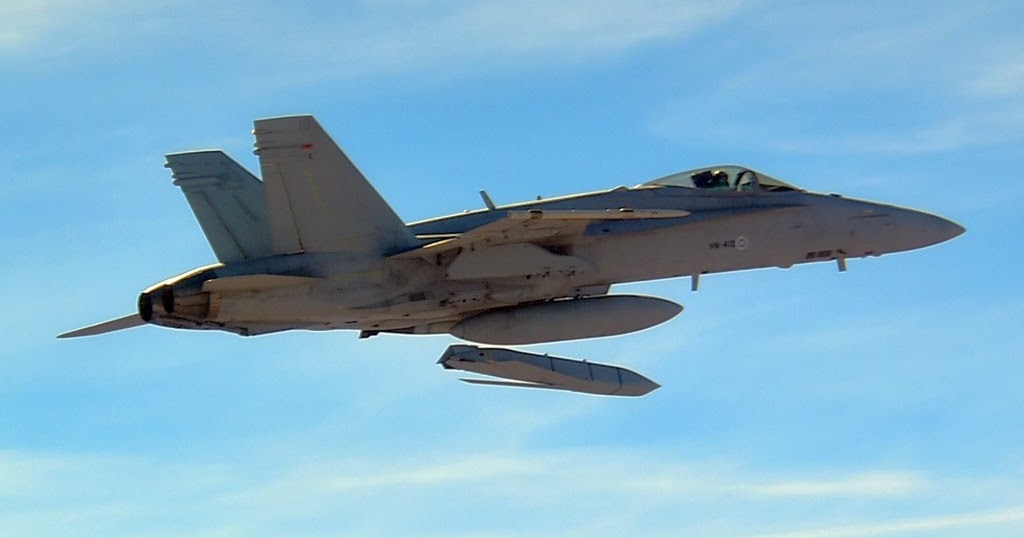
Another issue is the weapon carrying capacity for carrier aircraft.  For example, the F-18 Super Hornet can carry several smaller – meaning shorter range – weapons (acknowledging that every weapon carried reduces the aircraft’s flight range due to weight and drag) but only a couple of the larger weapons.  While publicity photos may show an aircraft decked out with every weapon the Navy has, an F-18 can only, practically, carry two JASSM on a realistic mission.  Other hard points are occupied by fuel tanks and defensive air-to-air weapons and even those are minimized in the interest of not negatively impacting the aircraft’s range more than necessary.  Thus, with two weapons per aircraft, it would require a strike force of, say, fifty aircraft just to mount a minimal strike of 100 weapons.  Recall, that the US used around sixty Tomahawks to strike a small, undefended Syrian air base in 2017 and only targeted a portion of the base (see, "Syrian Tomahawk Strike").  A realistic strike on a major, defended base would require something approaching two hundred missiles or more.  That would require 100+ strike aircraft (neglecting escort, EW, SEAD, etc. aircraft) which represents around five carrier air wings worth of strike aircraft under any realistic combat scenario.  The point is that the large, longer range, weapon density is so low as to nearly preclude carrier aircraft strikes even without consideration of enemy defenses and aircraft survivability.


One or Two Large Weapons is a Full Load


As I’ve often stated, the role of a carrier, today, is to escort and provide protection for the Navy’s true strike assets which are Tomahawk-launching Burke destroyers with their thousand mile range cruise missiles. 


_______________________________


[1]https://www.navair.navy.mil/product/FA-18EF-Super-Hornet


Wednesday, September 21, 2022

A Baby Step In The Right Direction?

ComNavOps has criticized and mocked the Navy’s headlong, uninformed leap into unmanned vessels and for good reason.  The movement is unsupported by realistic experimentation of any type.  The odds that uninformed, unsupported actions will lead to a good outcome are very poor.  However, the faintest glimmer of hope has emerged from the Navy in the form of some comments by CNO Gilday about the Navy’s unmanned plans.


As you recall, the Navy’s current path is to develop both a large (not very large actually;  corvette size) unmanned vessel (LUSV) which will be a mini-arsenal ship and a medium (pretty small actually; patrol boat size) size unmanned vessel (MUSV) which will be a sensor platform.  Now, however, CNO Gilday has hinted that plans may change and is backtracking on the MUSV.


I don’t know if we’ll have a medium unmanned or not. The stuff that [Vice Adm. Brad] Cooper’s doing right now with CTF 59 – using small unmanned [vehicles] on the scene in the air to sense the environment … in order to yield a common operational picture for allies and partners, as well as 5th Fleet headquarters, has changed my thinking on the direction of unmanned.[1]


Gilday said the service might be rethinking buying the MUSV after a series of exercises and experiments in U.S. 5th Fleet with Combined Task Force 59 … [1]


Instead of an MUSV,


However, the Navy might be able to get the sensor capability it wanted from MUSV through fused data from networked commercial systems to get an accurate maritime awareness picture more affordably. The 5th fleet started experimenting late last year with a 23-foot Saildrone Explorer out of Jordan and MARTAC’s Mantas T12 USV out of Bahrain.[1]


 Did you catch the reference to small, networked commercial systems?  This reveals a peacetime mindset – one unhindered by enemy actions or countermeasures.  I’ve pointed this out many times in the past.  The Navy simply does not appear to believe war with China will actually happen despite having publicly proclaimed that war was highly likely within the next several years.  I say they do not believe it because none of their actions show the slightest concern or desire to produce a combat fleet.  But, I digress …


 Gilday’s comments appear to be a reference to the tiny unmanned sailboats the Navy was playing with (see, “Pointless Drones”).  I’ve already mocked the sailboats but using small, cheap, expendable UAVs – though not tiny sailboats - as sensors could be an excellent option and one I’ve suggested many times.  If this is what Gilday was suggesting – and it’s far from clear that he was – then the Navy could be on a very good path to developing a viable situational awareness solution.


Still, small UAVs, of whatever type, have significant problems to overcome in order to use them as effective sensor platforms: 

  • Limited field of view
  • Constant communications requirement
  • Limited range
  • Low survivability
  • Requirement for large numbers


Gilday specifically mentioned the small sailboats but he is overlooking some serious problems and limitations with them: 

  • Seakeeping in open ocean
  • Sensor operation in open ocean will see very erratic and fragmented sensor readings due to very low sailboat height operating in waves and troughs
  • Very limited sensor range due to very low height;  horizon will be around 12 miles which is not much of a field of view relative to the area of the ocean
  • Very low speed which requires a very long time to get a sensor boat out to a useful position or to reposition it


Looming over all of the problems is the notion of using commercial unmanned vessels.  While this is appealing on the face of it, there is a potential problem with security.  Being a commercially developed system, intended for a civilian, commercial market, the controlling software and communications are highly unlikely to be able to withstand the effects of cyber attacks, cyber takeovers, emission controls, jamming, GPS disruption, etc.  It is quite likely that an enemy could commandeer these vessels, electronically or via software attacks/hacks with little effort.  It is a near certainty that China, and other unfriendly countries, already have the specs and software source code for any product with military potential.  They appear to have all our highly protected military information so why would we think they don’t have less secure, civilian information?


As CNO Gilday ponders the future of unmanned based on field experiments, the incriminating question is how come we weren’t conducting these experiments years ago before we jumped into unmanned?  We need to use surrogates and develop the concepts first, then the equipment.  We’re doing the reverse by developing the equipment first and then the concepts.


Out


In


The other major question is whether these field experiments are valid or whether they’re scripted exercises designed to produce a desired result … as most military experiments are? 


Unmanned assets can be a viable and valuable means of conducting surveillance but only with very strict constraints and only with very specific and well defined concepts of operations.  Unfortunately, I see no evidence that we’re following this path.  We seem to be grasping every unmanned idea that comes along, hoping something will work.  This is why we’re changing our unmanned plans on an almost daily basis.


_________________________________


[1]USNI News website, “Navy Rethinking Medium Unmanned Surface Vehicle After Middle East Tests, Says CNO Gilday”, Sam LaGrone, 28-Apr-2022,

https://news.usni.org/2022/04/28/navy-rethinking-medium-unmanned-surface-vehicle-after-middle-east-tests-says-cno-gilday


Monday, September 19, 2022

Kings Bay Dry Dock Repair

Arguably, the Navy’s biggest shortcoming is adequate repair and maintenance facilities and capacity.  A major part of that is the system of aging and inadequate dry docks.  A few years ago, the Navy committed to a 20 year, $21B overhaul of its public shipyards and dry docks and, in a somewhat surprising development, has been following through on that commitment by issuing contracts for repair of facilities and dry docks … at least, for now.


I desperately like to give credit where credit is due – an all too rare occurrence regarding the Navy – and one such example is the repair work for the Naval Submarine Base Kings Bay dry dock in Georgia.


From the Department of Defense contract award announcements website,


Alberici-Mortenson JV, St. Louis, Missouri, is awarded a $12,969,452 firm-fixed-price modification to previously awarded contract N69450-20-C-0016. This modification provides for the recapitalization of the dry dock at Naval Submarine Base Kings Bay, Georgia. Work will be performed in St. Marys, Georgia, and is expected to be completed by April 2023. This modification brings the total cumulative value of the contract to $625,470,806.[2]


Dry Dock - Kings Bay, GA

 Here's some detail about the work.


Under an IDIQ contract, the joint venture team of Burns & McDonnell and Moffatt & Nichol have been awarded a series of task orders with Naval Facilities Engineering Command Southeast (NAVFAC-SE) for a $474 million repair project at the Trident Refit Facility, Naval Submarine Base Kings Bay, Georgia.


Alternately titled “Dry Dock Recapitalization,” “TRF Dry Dock Repair,” and simply “Dry Dock Repairs,” the massive effort at the East Coast home of Trident nuclear-powered submarines began with a study, moved into design, and is now in Phase A of construction. NAVFAC-SE’s scope of work encompasses repairs to the massive structure—the largest covered dry dock in the Northern hemisphere—inclusive of building structure and envelope, power, lighting, fire protection, HVAC, plumbing, and support equipment and infrastructure. All existing training and maintenance facilities will be retrofitted, and some new facilities will be constructed to support the next generation of submarines.[1]


Dry dock maintenance and repair is desperately needed and far too long overdue.  From a Heritage Foundation report,


“The Navy’s attack submarines have also evolved, but the dry docks that service them have not: 17 dry docks can service older Los Angeles-class submarines, but only 12 can accommodate their replacement, the Virginia-class submarine, and only seven can service the newest Block V Virginia-class submarine, which is 83 feet longer than earlier variants and displaces an additional 2,400 tons,” the report reads.[3]


The Navy should be ashamed of the state of its maintenance and dry dock facilities and many CNO’s should be recalled to active duty and subjected to courts martial over the decades long neglect but at least the Navy is belatedly beginning to address the problem.  If they’ll diligently and aggressively continue to pursue the repair program then credit is due.  Well done, Navy.  Keep it up.


_______________________________


[1]https://axiasinc.com/naval-sub-base-kings-bay-dry-dock


[2]https://www.defense.gov/News/Contracts/Contract/Article/3151585/


[3]https://www.defensenews.com/naval/2021/03/19/the-us-navys-shaky-plan-to-save-its-shipyards-is-getting-overhauled/


Friday, September 16, 2022

USS Fitzgerald Returns

USS Fitzgerald, repaired after the Jun 2017 collision, recently completed its first deployment since the incident.  Fitzgerald completed three years, almost to the day, of repairs in Jun 2020.  Contrast this to the USS Yorktown that had extensive battle damage repaired in three days, as we just discussed.  Admittedly, this is peacetime and the urgency is not there but three years to repair a damaged ship does not bode well for war.