Showing posts with label Strike. Show all posts

Monday, March 16, 2026

On Balance

There’s never been a 100% one-sided war and the strikes on Iran are no exception.  According to Newsmax website, as reported on 12-Mar,
 
… at least 11 American military bases or installations have been damaged …[1]

Now, compare that to the reported hundreds or thousands of targets hit per day in Iran.  That’s about as lopsided as you can get.
 
Too many people are trying to portray this as some kind nearly even war with Iran effectively fighting back.  Well, that’s about as far from reality as you can get.


_______________________________
 
[1]Newsmax website, “Report: 17 US Sites Hit Across Mideast Since Iran War Began”, Charlie McCarthy, 12-Mar-2026,
https://www.newsmax.com/world/globaltalk/u-s-military-iran-war/2026/03/12/id/1249244/

Thursday, April 27, 2023

How Many Shots?

The Iowa class battleship of WWII had a bit over 1200 16” shells of various types in its magazines.  In addition, it carried several thousand 5” shells.
 
Cruisers had some 1400 8” shells depending on class.
 
The Fletcher class carried around 575 5” shells per gun for a ship total of nearly 3000 shells.
 
That’s a LOT of striking power! 
 
Well, sure, you say, but given the accuracy of the time, most of the shells fired were doomed to miss so they had to have large magazines.  WWII naval gun accuracy against ships was generally something on the order of 5%-10%, depending on a host of factors.  Of course, in the land attack/bombardment mission, every shell was a hit against something (that’s what area bombardment is!). 
 
Today, we have precision guided weapons and we like to believe that almost every shot is a hit.  We don’t need large inventories of missiles and we certainly don’t need large magazines of shells for our 5” guns since we just don’t use them and, if we do, we have advanced, precision fire control systems to ensure amazing accuracy.
 
Um …    Why?  Why do we think we don’t need large inventories of weapons?  Why do we think our weapons will hit with unerring accuracy?  It’s certainly not because of any realistic live fire test or exercises that have proven the effectiveness of our weapons because we flat out don’t do those.  It’s not because of the extensive history of actual combat use because there isn’t much and the existing data (Hughes) demonstrates that the accuracy of offensive weapons is actually pretty poor.[2]  It’s not because of calm, objective, reasoned analysis because, except for this blog, no one attempts that.  It’s not because of an objective analysis of modern defenses that our weapons would face because if we did that we’d have to admit that it’s highly unlikely our weapons would be very effective.
 
It turns out that we believe in our weapon’s accuracy because that’s what the Navy and the manufacturers tells us and because that’s what we want to believe.  Of course, the defensive weapon manufacturers also tell us that their weapons will defend with unerring accuracy and invincibility.  Wait, what now?  How can offensive and defensive weapons both have unerring accuracy and flawless performance?  One of the two – or both – has to be wrong.  Elementary logic dictates that you can’t have 100% successful offensive strikes against 100% successful defensive platforms.
 
Uh, oh.  I don’t like where this is going.
 
Is it possible that our vaunted, unerring, offensive missiles may be less than 100% accurate and successful?  If so, that would suggest we need bigger magazines/inventories.  I wonder how much less than 100% effective our attacking missiles will be?  10%?  50%?  80%? 
 
Uh, oh.  I really don’t like where this is going!
 
Maybe we’d better take a brief foray into the font of wisdom … historical data.
 
Unfortunately, there is very little direct, relevant, historical data regarding the accuracy of modern offensive weapons.  That being the case, why, then, do we so firmly believe our weapons will perform as advertised?  Here’s some of the data that I’m aware of, in no particular order:
 
Vincennes – The Vincennes tragedy saw the cruiser fire around 100 5” shells at Boghammer vessels with no recorded hits.
 
Praying Mantis – The April 1988 attack by the US against Iranian forces demonstrated that 5” gun attacks against oil platforms were almost totally ineffective with almost all shots missing.  This may have been due to the lattice-like nature of the target more than any inherent inaccuracy of the guns.
 
INS Hanit – A Hezbollah launch of two (some reports say three) C80x missiles against the unsuspecting Israeli Sa’ar 5 frigate resulted in only a single glancing hit that did little damage.
 
HMS Sheffield – The Sheffield was hit by one of two Exocet missiles fired by Argentine aircraft.
 
SS Atlantic Conveyor – The merchant ship was hit by two Exocet missiles after they reportedly were decoyed away from HMS Hermes (or HMS Ambuscade or transport Regent, depending on sources) and subsequently locked onto the merchant vessel.[1]  That’s zero strikes on the initial target and two strikes on a subsequent, fortuitous target.
 
HMS Invincible – A single Exocet was launched at the Invincible but missed.
 
USS Mason – The Burke class destroyer, USS Mason, was supposedly attacked several times by missiles (C-80x?) fired from Yemen.  No hits were recorded.  It should be noted that the attacks are unverified (see (“Yemen Missile Attacks”).
 
Latakia and Baltim - Israeli missile boats engaged Syrian and Egyptian boats (see, “Missile Boat Battles –Latakia and Baltim”).  Exact missile numbers for launches and hits are unavailable but the overall missile performance of the Gabriel Mk1 and SS-N-2 Styx missiles appears to have been around 10% effective though far more effective on the Israeli side than the Syrian/Egyptian side.
 
Hughes[2] (compiled by John Schulte) presented the data for every known anti-ship missile attack (222 ASCMs from 1967 to 1992), broken down by the defender’s status at the time of attack.  For defenseless ships, primarily large commercial vessels, the probability of hit = 91%.  Against defendable targets (ships capable of defending themselves but that did not), the probability of hit = 68%.  Finally, against defended targets (ships that attempted some form of defense), the probability of hit = 26%.
 
Noting the 26% probability of hit against defended targets and noting that very few defensive missile intercepts have ever been attempted, we can conclude that most defensive efforts are electronic warfare (EW) in nature.  Thus, the vast majority of that diminished 26% hit probability is likely due to EW defensive efforts.  When actual, active, surface to air missile defenses are added to that, the 26% probability of hit is going to drop substantially to something on the order of 10% or less.  Those 8 rack mounted anti-ship missiles that the US is so fond of, then, are going to be very, very lucky to generate even a single hit.
 
Iran-Iraq Tanker War – This would provide an interesting data set for missile effectiveness against unresisting targets but I’ve been unable to find any data on the number of hits/launches.
 
 
Conclusion
 
We see, then, that the historical record across multiple generations of offensive weapons shows that none are particularly effective.  That should tell us something about our habit of providing ships with just two 4-missile, bolt-on, racks of anti-ship missiles (Mk141 Harpoon launcher or similar) as our main offensive firepower.
 
As our fathers in WWII understood, large magazines are necessary to ensure success (reminder – we’re talking about offensive weapons; large magazines are not indicated for defensive weapons). 
 
So, what does all this mean on a practical basis?  It means that we need much larger offensive magazines and inventories if we’re to be combat effective.  Specifically,
 
  • We need more SSGNs due to their large missile inventory.
  • We need more offensive missiles, particularly anti-ship missiles on Burkes/Constellations.
  • This demonstrates that the Marine’s tiny missile shooting units are worthless since they lack the salvo density to be combat effective.
 
We need to remember that offense wins wars, not defense.  We’ve become a defensive Navy (see, “Defensive Mindset” and “MoreOffense, Please”) and we need to refocus on offense which means significantly increasing our offensive magazines and inventories.
 
The truism, ‘Attack Effectively, First’, reminds us what’s important but we can only attack effectively if we have sufficient offensive weapons.


________________________________
 
[1]https://nationalinterest.org/blog/reboot/falklands-war-argentina-used-french-jets-sink-two-british-ships-186710
 
[2]”Fleet Tactics and Coastal Combat”, Wayne P. Hughes Jr., Naval Institute Press, 2000, ISBN 1-55750-392-3, p.275-276.

Wednesday, October 12, 2022

Hypersonic Missile Target Set

The Navy (and US military, in general) has latched on to hypersonic weapons and, as is typical of the Navy, with absolutely no supporting evidence or testing that demonstrates that hypersonic weapons will be effective enough to justify their cost and other negative impacts.  We touched on this in a previous post (see, “Conventional Hypersonic Prompt Strike Missile”).


Speaking of cost,


Based on internal Defense Department estimates on the number of weapons planned, that amounts to about $106 million per missile for the Army and $89.6 million for the Navy.[1]


One time use missiles that cost a hundred million dollars!  How can that possibly be justified?


Here’s a cost for integrating – not producing! – hypersonic missile components:


Lockheed Martin won $347 million to integrate at least eight of those glide bodies with guidance systems, rocket boosters, protective canisters, and so on, arming a battery of four Long Range Hypersonic Weapon (LRHW) launchers.[2] [ed. = $43M each]


The 2021 GAO Annual Weapons Assessment report cites a program cost of $3.96B ($FY21) for a quantity of 11 missiles ($360M each) without specifying what’s included in the cost.


While there are no reliable unit cost figures for hypersonic weapons, yet, it is clear that they’re going to be very expensive.  The first reference, citing a cost of $90M per missile for the Navy, is the most authoritative estimate that I’ve been able to find.


Now, with that kind of staggering cost in mind, how do we justify hypersonic weapons?


Well, one way would be if the destructive effects were several levels beyond devastating - a near nuclear bomb level of destructive power from a single weapon.  However, the destructive effects are nowhere near that level.  They will either depend on kinetic energy alone or use a conventional warhead which limits the size of the explosive power to conventional levels although that would be added to whatever kinetic effects there are.


As we’ve repeatedly demonstrated via calculations, kinetic energy, alone, is rarely sufficient to produce a useful destructive force.  Kinetic energy is also a tricky phenomenon to effectively harness.  For example, the bullet through paper analogy that I’ve often cited renders kinetic energy unusable.  Even when a physically substantial target is hit, the kinetic energy is likely to be gradually released (on a relative time scale) as opposed to the instantaneous release from a conventional explosive.  The gradual release ‘dilutes’ the destructive effect of the kinetic energy release/conversion.


Here’s an illustrative example of the kinetic energy effects of a hypersonic weapon.  The data is all speculative as there are no publicly available specifications, that I’m aware of.


Mass of common glide body = 900 kg

Velocity = Mach 5 = 3800 mph = 1699 m/s


     k.e. = 0.5 * mass * (velocity)squared

     k.e. = 0.5 * 900 * (3800)squared

     k.e. = 1,299,000,000 J


By comparison, a kg of TNT releases 4,184,000 J.  Thus, the hypersonic weapon is equivalent to 310 kg of TNT (683 lb).  A Tomahawk missile has a 1000 lb conventional warhead so a hypersonic weapon would be equivalent to less than 1 Tomahawk missile.  That’s substantial, to be sure, but it’s nothing approaching near nuclear bomb type of destruction.


Of course, if the warhead is heavier or lighter or the speed is greater or lesser, that would change the calculation.


The point is that while a weapon that is equivalent to one Tomahawk missiles is potent, it does not justify a hundred million dollar price tag when that hundred million dollars could buy 50 Tomahawk missiles.


We’ve discussed in previous posts that kinetic weapons (no explosive warhead) depend on the transfer/conversion of their kinetic energy into thermal energy and resulting shock/pressure effects.  In order for this to happen, the kinetic projectile must encounter sufficient resistance to quickly and efficiently transfer/convert the kinetic energy.  This is the bullet/paper problem: a bullet (lots of kinetic energy) fired at a piece of paper, will do very little damage, leaving only a bullet size hole as it passes through the paper and the paper will emerge virtually undamaged because the paper offers insufficient resistance to transfer/convert any of the bullet’s kinetic energy to the paper target.  Similarly, a hypersonic kinetic projectile that encounters a soft target like a ship will likely pass through, causing relatively little damage.  Conversely, a substantial, solid target such as a concrete bunker, fortification, or hardened aircraft shelter will offer sufficient resistance to facilitate the energy conversion and the target will be destroyed.


Closely related to this resistance problem is that a hypersonic missile will release/convert its kinetic energy slowly as opposed to a conventional explosive, such as a Tomahawk missile, which releases its energy instantaneously.  When you see videos of rail gun projectiles impacting targets, the targets are, invariably, steel blocks multiple feet in thickness and the projectile produces an impressive fireworks display.  However, how many real world targets consist of steel blocks a few feet thick?  A hypersonic body impacting a real world target, such as a building, is likely going to penetrate straight through the target, releasing/converting only a portion of its energy.  The remainder will be released/converted in the ground as the body continues to penetrate until it stops.  In fact, the body might well pass straight through the building, leaving only a small hole, and bury itself in the ground (the bullet through paper analogy).  What effect that underground release/conversion of energy would have on the above ground structure/target is unknown.  I’m not aware that anyone has done any realistic testing of hypersonic weapon destructive effects.  We desperately need realistic testing before we continue down the staggeringly expensive hypersonic weapons path.  It’s going to be very difficult to justify a hundred million dollar, one time use weapon.


A final consideration about target sets is that the hypersonic missile inventory will likely be quite small.


The [Pentagon] internal assessment, made available to Bloomberg News, shows an expected total of … 240 missiles for the Navy.[1]


Thus, we have to not only take into account the cost of a hypersonic missile but also the inventory level.  With very few missiles, we can’t waste them against anything but extremely high value targets.  We also can’t waste them against heavily defended targets.


Moving on, we’ve noted that hypersonics have a fairly limited target set.  With no guidance package, they can only be used against fixed targets.  In order to effectively release/convert their kinetic energy, the target has to be physically substantial.  Even a ship is likely to see a hypersonic weapon pass straight through (this phenomenon was seen often in WWII when large caliber, armor piercing shells would pass straight through a smaller target ship, causing very little damage.


What does all of the preceding tell us about the hypersonic weapon target set?  It tells us that valid targets must be: 

  • Fixed targets since hypersonic weapons don’t have guidance packages
  • Extremely high value targets to justify the cost
  • Physically hard targets to trigger an effective degree of energy release/conversion
  • Less defended so as not to waste expensive missiles


This excludes: 

  • Area bombardment / suppression fire
  • Mobile targets
  • Physically soft targets such as trucks, tanks, artillery, aircraft, most buildings
  • Heavily defended targets


Now, let’s consider how many real world targets fall into the valid target set?  The answer is … not many.  Examples might be a very large headquarters building, hardened aircraft hangars, underground bunkers, nuclear missile silos, and Chinese submarine pens built into mountains.  Even within this set, some of the potential targets are questionable.  For example, is it really cost-effective to destroy a hardened aircraft hangar with a hundred million dollar missile as opposed to a couple of Tomahawks?


The harsh reality is that the vast majority of targets are not valid hypersonic weapon targets.  These would include trucks, tanks, artillery, people, ships, aircraft, radars, and almost every worthwhile target one might find on a battlefield. 


Thus, hypersonics would seem to be more a one-shot, sniper type weapon for use against very high value, very constrained targets rather than a general warfare weapon.


_____________________________________


[1]Bloomberg website, “Hypersonic Sticker Shock: U.S. Weapons May Run $106 Million Each”, Anthony Capaccio, 12-Nov-2021,

https://www.bloomberg.com/news/articles/2021-11-12/hypersonic-sticker-shock-u-s-weapons-may-run-106-million-each


[2]Breaking Defense website, “Hypersonics: Army Awards $699M To Build First Missiles For A Combat Unit”, Sydney J. Freedberg Jr., 30-Aug-2019,

https://breakingdefense.com/2019/08/hypersonics-army-awards-699m-to-build-first-missiles-for-a-combat-unit/

Monday, September 26, 2022

Carrier Aircraft Land Attack Weapon Ranges

Many people still believe that carrier aircraft constitute a land attack strike force.  This is incorrect.  Let’s see why.


Any attacking asset must be able to survivably overcome layered defenses consisting of both surface to air missiles (SAM) that can range out to a few hundred miles and land based defending aircraft that can range out to several hundred miles.  Thus, a survivable launch point must be further out than the defensive range, meaning a launch point several hundred miles from the target. 


Obviously, an aircraft with free fall, gravity bombs cannot survivably and successfully penetrate to the required one mile launch range.  Thus, in order for carrier aircraft to conduct a survivable, successful land attack strike, they must have weapons with ranges greater than several hundred miles.  Every extra mile that the aircraft has to penetrate the layered defenses in order to reach an inadequately short range launch point increases the risk and decreases the likelihood of success.


The following table lists the ranges of common carrier aircraft strike weapons.[1, and various Wikipedia entries]


Weapon

Range, miles

AGM-158D (alt. AGM-158B-2) Joint Air to Surface Standoff Missile – Extreme Range (JASSM-XR)a

1200

AGM-158B Joint Air to Surface Standoff Missile – Extended Range (JASSM-ER)b

575

AGM-158A Joint Air to Surface Standoff Missile (JASSM)

230

AGM-84H/K Standoff Land Attack Missile – Expanded Response (SLAM-ER)

170

AGM-88 HARM / AARGM

92

AGM-154 Joint Stand-Off Weapon (JSOW)

80

GBU-39 Small Diameter Bomb (SDB)

69

GBU-31/32/35/38/54 Joint Direct Attack Munition (JDAM)

15

AGM-65E/F Maverick

12

AGM-179 Joint Air to Ground Missile (JAGM)b

5

Hydra 70 2.75” rockets

2

GBU-10/12/16 Paveway Laser Guided Bombs

1

Mk 80 series free fall bombs

1

CBU series cluster bombs

1

M61A1/A2 Vulcan 20mm cannon

0.3


a Developmental, does not yet exist

b Not yet fully in service


The table makes it clear that the Navy does not operate weapons with sufficient range to keep the launch aircraft out of range of land based SAMs and intercepting aircraft.  It might be possible to safely and successfully attack lightly defended targets but major, well defended targets will have layered SAM defenses and nearby air bases supporting intercepting aircraft.


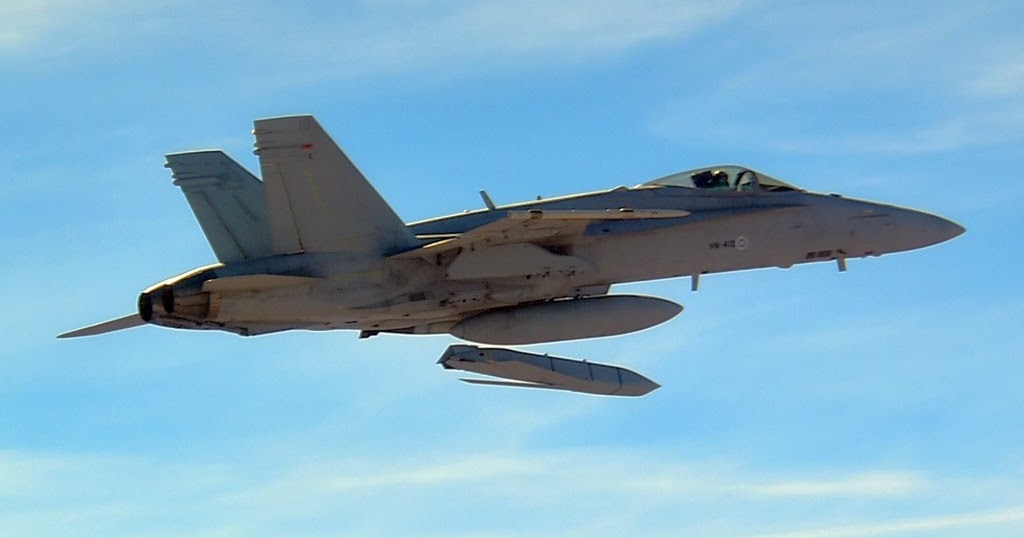
Another issue is the weapon carrying capacity for carrier aircraft.  For example, the F-18 Super Hornet can carry several smaller – meaning shorter range – weapons (acknowledging that every weapon carried reduces the aircraft’s flight range due to weight and drag) but only a couple of the larger weapons.  While publicity photos may show an aircraft decked out with every weapon the Navy has, an F-18 can only, practically, carry two JASSM on a realistic mission.  Other hard points are occupied by fuel tanks and defensive air-to-air weapons and even those are minimized in the interest of not negatively impacting the aircraft’s range more than necessary.  Thus, with two weapons per aircraft, it would require a strike force of, say, fifty aircraft just to mount a minimal strike of 100 weapons.  Recall, that the US used around sixty Tomahawks to strike a small, undefended Syrian air base in 2017 and only targeted a portion of the base (see, "Syrian Tomahawk Strike").  A realistic strike on a major, defended base would require something approaching two hundred missiles or more.  That would require 100+ strike aircraft (neglecting escort, EW, SEAD, etc. aircraft) which represents around five carrier air wings worth of strike aircraft under any realistic combat scenario.  The point is that the large, longer range, weapon density is so low as to nearly preclude carrier aircraft strikes even without consideration of enemy defenses and aircraft survivability.


One or Two Large Weapons is a Full Load


As I’ve often stated, the role of a carrier, today, is to escort and provide protection for the Navy’s true strike assets which are Tomahawk-launching Burke destroyers with their thousand mile range cruise missiles. 


_______________________________


[1]https://www.navair.navy.mil/product/FA-18EF-Super-Hornet


Thursday, March 24, 2022

Duplication and Budget Grabs

The Marines believe that the Navy abandoned them at Guadalcanal so they developed their own air force in a massive duplication of effort and overlap of responsibilities.


Today, the Army believes that the Air Force is not providing intelligence (ISR) quickly enough for the Army’s Long Range Precision Fires program and so they’re looking to develop their own ISR effort in a massive duplication of effort and overlap of responsibilities.


… Army leaders, which for decades have complained that they [do] not receive the battlefield-ready ISR it needs in a timely manner from either the Air Force or the Intelligence Community (IC), are now seeking to develop their own ISR satellite payloads that they can task for themselves. (1)


Key … to the Army’s overarching plan for high-speed future warfare, is the ability for taskable, over-the-horizon sensors that provide the intelligence, surveillance and reconnaissance (ISR) to enable targeting of the service’s developing arsenal of very long-range weapons, or in Army-speak, long-range precision fires. (1)


The Army is developing their own long range precision missile strike capability (out to 1000 km) which is the Air Force’s responsibility and will result in a massive duplication of effort and overlap of responsibilities.


The Marines, fearing budgetary irrelevance, have scrapped their main mission and equipment and are morphing into a small unit, light infantry, missile-shooting, coastwatcher organization and are demanding their own long range anti-ship missiles, private amphibious/logistics fleet, and some type of anti-submarine warfare capability in a massive duplication of effort and overlap of responsibilities with the Navy.


The Army has a massive navy of their own with Besson class landing ships (LSV – Logistics Support Vessels – 300 ft, 4000 tons), LCM landing vessels, and a myriad of other logistics ships, barges, and other support ships.  The Army operates around 90 large ships and hundreds of watercraft.


As we dig down, we find that the scope and scale of duplication between the services is breathtaking and, equally astounding, is increasing.  The end result is we’re slowly but surely developing four services that are complete duplicates of each other.  

  • We have four air forces.
  • We have three navies.
  • We have four long range missile strike forces.
  • We have four ground combat forces (Army, Marines, Navy SEALs/EOD/medical, Air Force Special Warfare).
  • We have four cyber forces.
  • We have four ISR forces.


This is unwise, inefficient, and unsustainable.  Each service is spending precious budget dollars duplicating the other service’s capabilities while their own core responsibilities suffer.  For example, the Marines have no significant mobile, armored, anti-air capability and yet they’re spending their money on anti-ship and ASW.  The Army lacks mobile, armored artillery vehicles and yet they’re spending their money on duplicating the Air Force’s deep strike.  And so on.


We desperately need a central, controlling authority to put a stop to this massively wasteful duplication of effort.  We have several levels of such authority (President, Secretary of Defense, Joint Chiefs) but none seem willing to do their jobs and just say no to the various services.


Everyone is trying to fight everyone else’s battle for no good reason other than budget grabbing.  For example, the Marines were in a panic about being rendered irrelevant by the China/Pacific scenario and have been frantically encroaching on the Navy’s mission in order to remain budget-relevant.


This must stop.  We need someone in higher authority to put a stop to this.  It’s costing us untold sums of money to duplicate capabilities.


______________________________________


(1)Breaking Defense website, “Project Convergence 2021 Kicks Off; Showcases 110 New Technologies”, Theresa Hitchens, 12-Oct-2021

https://breakingdefense.com/2021/10/project-convergence-2021-kicks-off-showcases-110-new-technologies/


Monday, October 4, 2021

Navy Strike Doctrine

We’ve had a lot of discussions about the role of the carrier.  ComNavOps has stated that strike (land attack) is no longer a carrier mission.  There remains, however, a substantial number of observers who still cling to the outdated concept of carrier strike operations.


Why is carrier strike – meaning, manned aircraft – no longer a mission?  Modern, peer defenses, consisting of both defending aircraft and land based surface to air (SAM) missiles along with extensive and sophisticated sensors have rendered aircraft strikes far too risky.


The preferred alternative is, of course, cruise missiles as suggested by the following missile characteristics.


Cost – Tomahawk cruise missiles cost around $2M compared to aircraft which cost $80M-$100M each.  In addition, aircraft operate on a daily basis and flight hour costs are on the order of $15K-$30K per flight hour, day after day.  That makes for an incredibly expensive weapon delivery system.  In contrast, a cruise missile has no operating or maintenance costs to speak of.  Finally, the cost of training and ‘maintaining’ a pilot is enormous whereas, again, the cruise missile has no pilot cost.


Expendability – Cruise missiles are, by design and by cost, expendable.  Aircraft, by design and cost, are not.  Modern peer defenses guarantee that strike aircraft will suffer significant attrition and the cost to replace the airframe and produce a new pilot is staggering.  Worse, the time required to produce new airframes and pilots is prohibitive during a war.


Stealth – The US Navy currently has no stealth strike aircraft.  That aside, cruise missiles have significantly greater stealth than even a stealth aircraft due to their much smaller size, smaller cross sectional area, smaller profile (regardless of angle), smaller engine exhaust (IR signature), and ability to fly a sea skimming terminal approach.  And, of course, new cruise missiles have stealth shaping.


Numbers – The current US Navy Tomahawk cruise missile inventory is somewhere in the vicinity of 3000-5000.  The Navy currently has 9 air wings with around 44 F-18 Hornets in each for a total of 396 potential strike aircraft.  Of course, in actual operations only a fraction of those would be available as aircraft are needed for carrier defense, various CAPs, tankers, and escorts.


Missiles can be massed in very large numbers against a target.  Strike aircraft are severely limited in number although each aircraft can carry 2-4 missiles or several bombs.  Weight limits, weight distributions, external fuel tanks, range considerations, self-defense requirements, etc. limit the number of missiles that can realistically be carried.


Weather – While carrier aircraft can operate in bad weather, to a degree, there are significant limits.  Missiles, in contrast are virtually unaffected by weather.


Range – Cruise missiles have a range of around 1000 miles.  Aircraft have an effective combat range of 200-300 miles although various types of standoff missiles would add to that range.  For example, the air launched Long Range Anti-Ship Missile (LRASM) has a range of somewhere around 300 miles which, when added to the aircraft’s range, puts the total strike range at around 500-600 miles.  The extended range Joint Air-to-Surface Standoff Missile (JASSM-ER) has a range of 500 miles or so which, combined with the aircraft’s range, gives a total strike range of 700-800 miles.  Other weapons such as the Joint Standoff Weapon (JSOW) have much lesser ranges.  JSOW has a high altitude release range of 70 miles.


The benefit, such as it is, of air launched, standoff attack missiles is negated by very long range SAM defenses and enemy aircraft which can, and will, contest the launch points.  The effort required to conduct an airborne, standoff strike (aircraft, fighter escorts, tankers, EW escorts, BARCAP, etc. also negates the benefits.  In short, it requires a far more massive effort to conduct an airborne, standoff strike than to conduct a simple ship-launched, cruise missile strike and the benefits are few especially when weighed against the inevitable aircraft losses.


So, is ComNavOps alone in his assessment?  After all, a lot of people are still unwilling to give up their comforting paradigm of carrier strike.  Well, it would seem that the Navy has also concluded that cruise missiles are the preferred strike asset as evidenced by the strike history of the last few decades.  The table below is adapted from Wikipedia.(1)


Operation

Date

No. of Missiles

Gulf War

1991

288

Iraq disarmament

Jan 1993

46

Iraq disarmament

Jun 1993

23

Operation Deliberate Force

Sep 1995

13

Iraq disarmament

Sep 1996

44

Operation Infinite Reach

Aug 1998

79

Operation Desert Fox

Dec 1998

325

NATO bombing of Yugoslavia

1999

218

Operation Enduring Freedom

2001

50

Invasion of Iraq

2003

802

Dobley airstrike

Mar 2008

2

Al-Qaeda training camp in Yemen

Dec 2009

2

Libya

Mar 2011

124

Military intervention against ISIL

Sep 2014

47

Attack on suspected radar sites in Yemen

Oct 2016

5

Shayrat airbase strike

Apr 2017

59

Damascus/Homs chem weapons strike

Apr 2018

66


There have been manned aircraft strikes during that time but those have been relatively few and only in low threat scenarios such as the infamous ‘truck plinking’ during the ISIS campaign.


You might also recall that not too long ago, the Navy had stated that the F-35 would be last manned naval aircraft – further recognition that manned aircraft strikes were no longer viable – and, more recently, the Navy attempted, but failed, to develop unmanned strike UAVs (that eventually ‘devolved’ into the unmanned tanker).  Clearly, the Navy has moved on from carrier strikes.


The implication of the Navy’s recognition that cruise missiles are the preferred strike asset is that the carrier air wing should be shifting its composition from strike to air superiority.  We need to drop any aircraft that is a ‘strikefighter’ and switch to pure air superiority.  The immediate import of this line of reasoning is that the Next Generation Air Dominance (NGAD) aircraft, which the Navy is working on now, needs to be a pure air superiority fighter and not a strikefighter.  Disturbingly, the Navy is already referring to the NGAD as the F/A-XX strikefighter so that train is already headed off the tracks.


Carrier aircraft strike has gone the way of the battleship in terms of being the primary strike method.  We need to complete the transition to carrier air superiority by modifying our doctrine and operational practices and adjust our air wing composition accordingly.  Carriers and their air wings remain just as vitally important as ever but their mission has changed.  Just as the battleship proponents clung to their outmoded paradigm, so too will the carrier strike proponents cling to theirs but the change is inevitable.


________________________________


(1)https://en.wikipedia.org/wiki/Tomahawk_(missile)#United_States_Navy